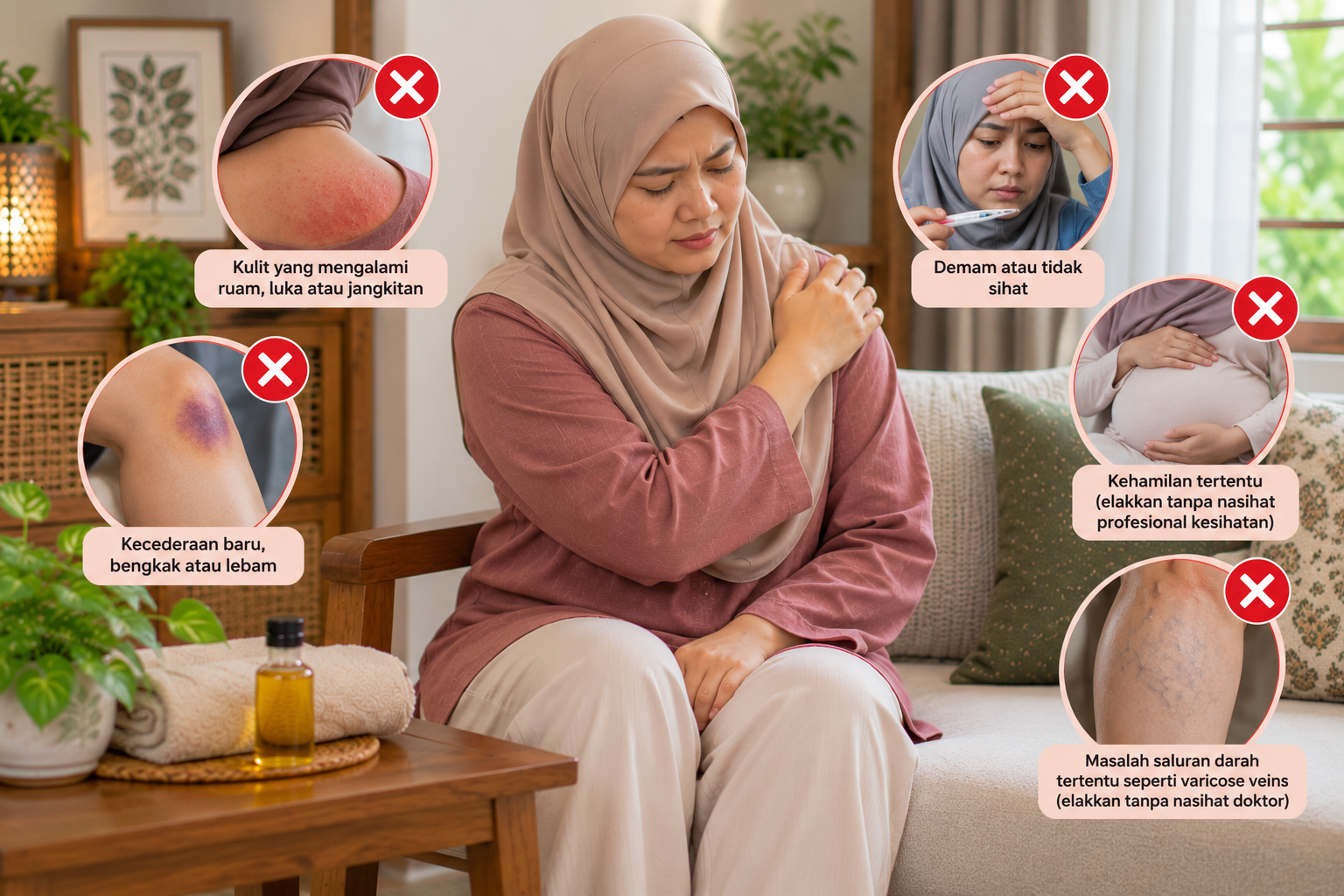
When Should Massage Be Avoided? Warning Signs to Know
Key points to understand Local problems such as open wounds, infection, burns, recent sprains and suspected fractures should not be massaged. General warning si...

Massage is not simply about pressing an area of the body that feels tired. Smooth hand movement, controlled pressure and skin comfort all contribute to a pleasant massage experience. Massage oil helps by creating a lubricating layer between the hands and the skin.
When skin is massaged without oil, the hands may not glide smoothly. Excessive friction can pull the skin and cause stinging or redness, especially when the same area is worked repeatedly.
A thin layer of oil helps the hands glide across the skin. Research on skin friction has shown that oil treatment can reduce frictional force at the skin surface. During massage, this makes long strokes, gliding movements and gentle kneading more comfortable.
More oil is not necessarily better. Excess oil may make the surface so slippery that pressure becomes difficult to control. Begin with a few drops and add more gradually according to the size of the area being massaged.
When the hands move without catching on the skin, pressure can be applied more evenly and adjusted to the recipient's comfort. Larger areas such as the shoulders, back, thighs and calves may require longer strokes. Smaller areas such as the palms, wrists and neck usually need less oil.
Massage does not have to be forceful. Excessive pressure may cause discomfort or bruising, especially in people with sensitive skin, those taking blood-thinning medicines or those with certain health conditions.
Pour a small amount into the palm and rub both hands together before touching the skin. Begin with slow movements and increase pressure gradually. Do not massage broken, inflamed or infected skin, or an area that has recently sustained a serious injury.
Use the product only on healthy skin and follow its label. Avoid the eyes, mouth, sensitive areas, rashes, wounds, inflamed skin and recently injured areas. Wash the hands after application and stop using the product if intense stinging, itching, swelling, blistering or breathing difficulty occurs.
Do not apply excessive amounts, cover the area tightly or combine the product with a heating pad. Children, pregnant women, older adults and people with skin disease or relevant health conditions should seek medical or pharmacy advice when uncertain.
Evaluate what can genuinely be observed: do the hands glide comfortably, does the skin remain normal, and does the user feel at ease? A stronger aroma or sensation does not necessarily mean that a product is more effective.
Marketing language should remain responsible. Massage oil may be described as part of a topical self-care experience, but it should not be presented as a substitute for diagnosis, medical treatment or guaranteed healing.
Minyak Tapil Cap Wanita may be included in a daily massage routine. Its texture helps the hands glide while providing its characteristic aroma and application sensation. Follow the label directions and stop using it if irritation occurs.
Friction Dynamics of Human Skin Treated with Oil under Nonlinear Motion (PubMed, 2024). Source link
Massage Therapy: What You Need To Know - NCCIH. Source link
Awang Kinchai
Updated
Information on this site is for general information only and is not a substitute for professional medical advice. Consult a qualified healthcare practitioner for any health condition.
Key points to understand Local problems such as open wounds, infection, burns, recent sprains and suspected fractures should not be massaged. General warning si...
Key points to understand A gentle shoulder routine can support relaxation, but it does not correct an undiagnosed neck or nerve problem. Work posture, screen he...
Key points to understand The giver should ask about pain, injury, surgery, pregnancy, medicines and relevant health conditions. The room should be stable, well...
Install App