Minyak Tapil Cap Wanita Usage
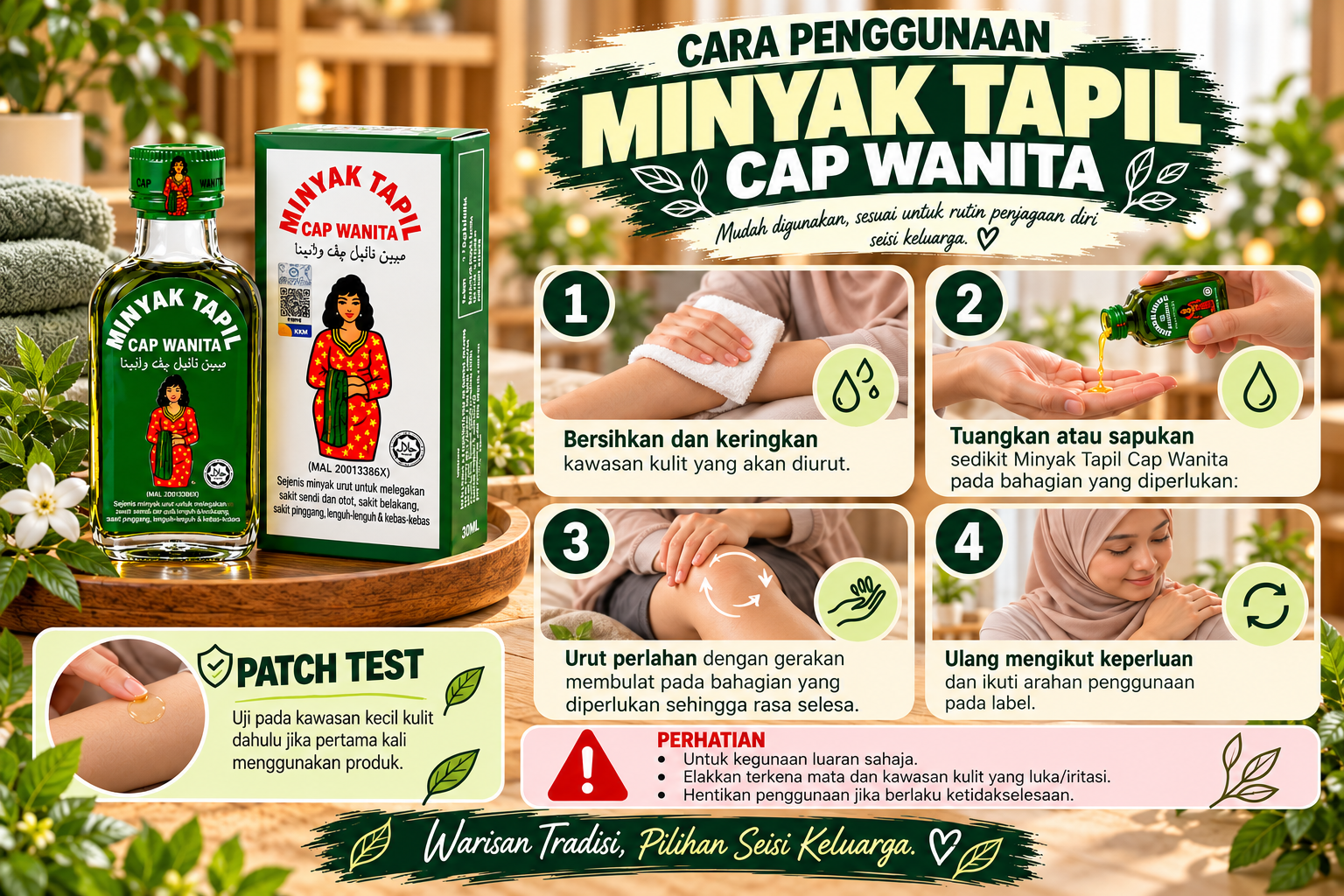
How to Use Minyak Tapil 1️⃣ Clean the skin – Ensure the area is clean and dry. 2️⃣ Apply a small amount – Use on the desired area. 3️⃣ Massage gently – Massage...
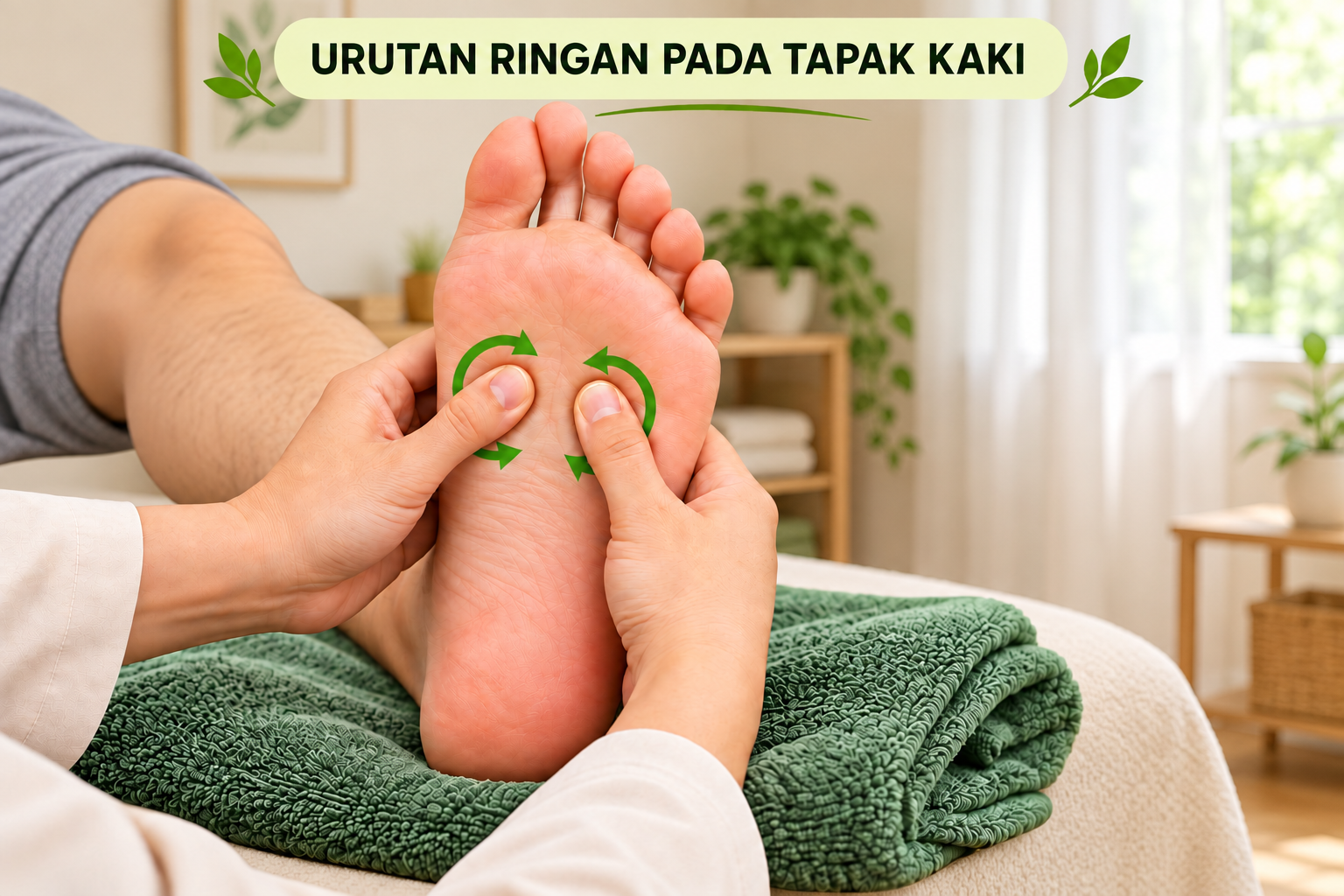
Ankle, heel and sole massage should be performed with the foot supported. Use the thumbs over the soft sole and light strokes around the ankle. Do not press ankle bones, the Achilles tendon, wounds, cracks or swelling. Severe pain after a sprain requires assessment before massage.
Feet carry body weight throughout the day, and the soles and heels may feel tired after standing or walking. Gentle massage can be a restful routine, but the ankle needs care because bones and tendons lie close to the skin.
Do not massage a sprained, swollen, bruised, deformed or non-weight-bearing foot. People with diabetes, poor circulation or reduced foot sensation should seek professional advice first because small wounds can go unnoticed.
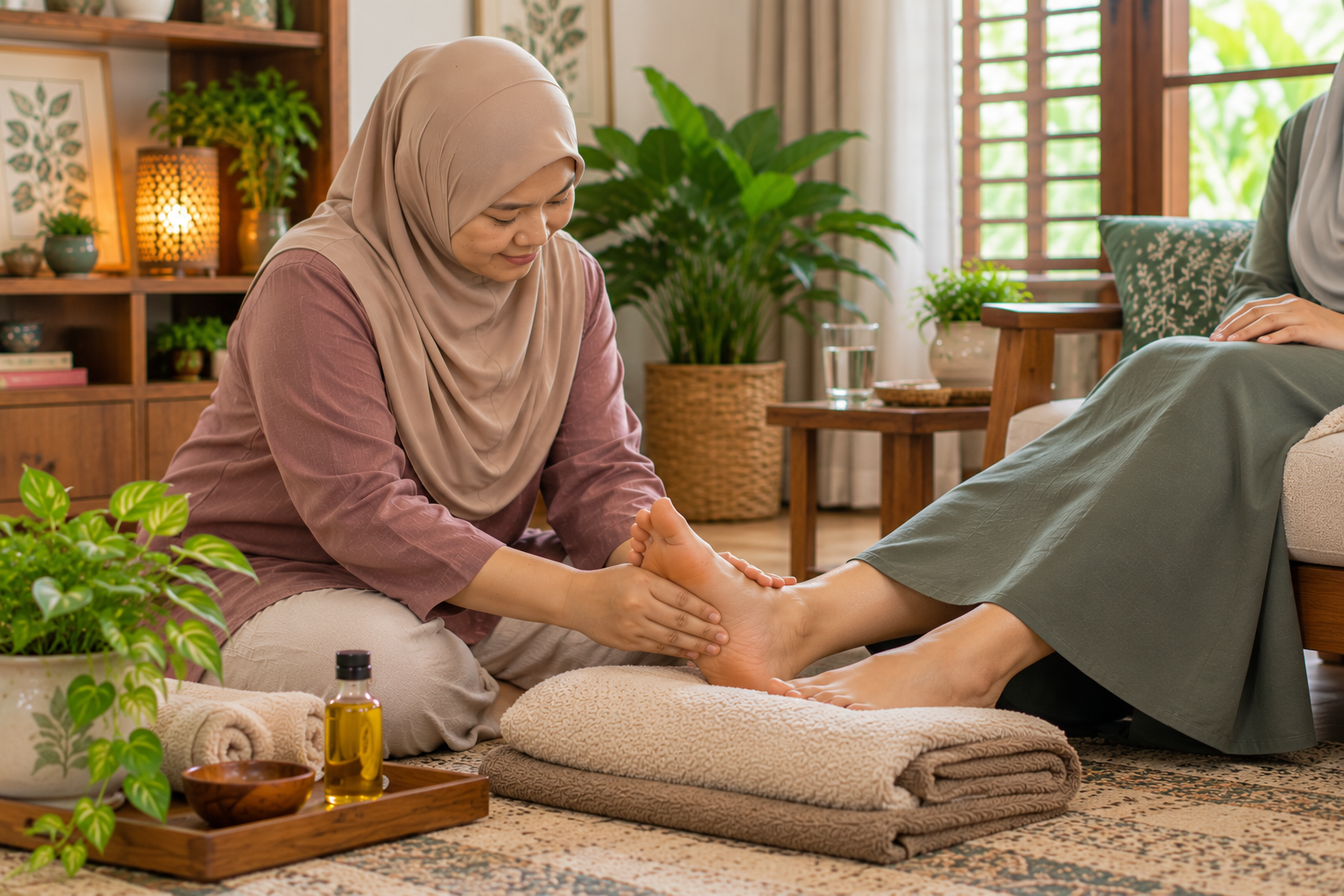
Body position: Sit back and rest the foot across the opposite thigh, or have a family member support it on a towel. Keep the ankle neutral and do not twist it.
Amount of oil: Use 3–5 drops per foot. Excess oil makes the sole slippery, so wipe it thoroughly before standing or walking.
Duration and pressure: Massage each foot for 5–7 minutes. Remain seated briefly afterwards and ensure the floor and sole are oil-free.
Areas to avoid:
Stop signs: Stop for sharp pain, numbness, tingling, severe cramp, increasing swelling or difficulty moving the foot.
Gentle massage should feel calm and manageable during and after the session. A stronger sensation is not proof of greater benefit. If symptoms persist, recur or interfere with normal activity, obtain advice from a qualified healthcare professional.
Minyak Tapil Cap Wanita may be applied thinly to healthy sole and heel soft tissue. Wipe away excess to reduce slipping and never apply it to an open wound.
1. NHS - Ankle pain — Source link
2. NHS - Heel pain — Source link
3. NCCIH - Massage Therapy: What You Need To Know — Source link
#FootMassage #HeelMassage #AnkleMassage #SoleMassage #MinyakTapilCapWanita
Noor Bulan
Updated
Information on this site is for general information only and is not a substitute for professional medical advice. Consult a qualified healthcare practitioner for any health condition.
How to Use Minyak Tapil 1️⃣ Clean the skin – Ensure the area is clean and dry. 2️⃣ Apply a small amount – Use on the desired area. 3️⃣ Massage gently – Massage...
Key points to understand A supported, gentle routine may feel comfortable when tiredness is ordinary and both legs appear normal. It is not appropriate to massa...
Key points to understand A gentle shoulder routine can support relaxation, but it does not correct an undiagnosed neck or nerve problem. Work posture, screen he...
Install App