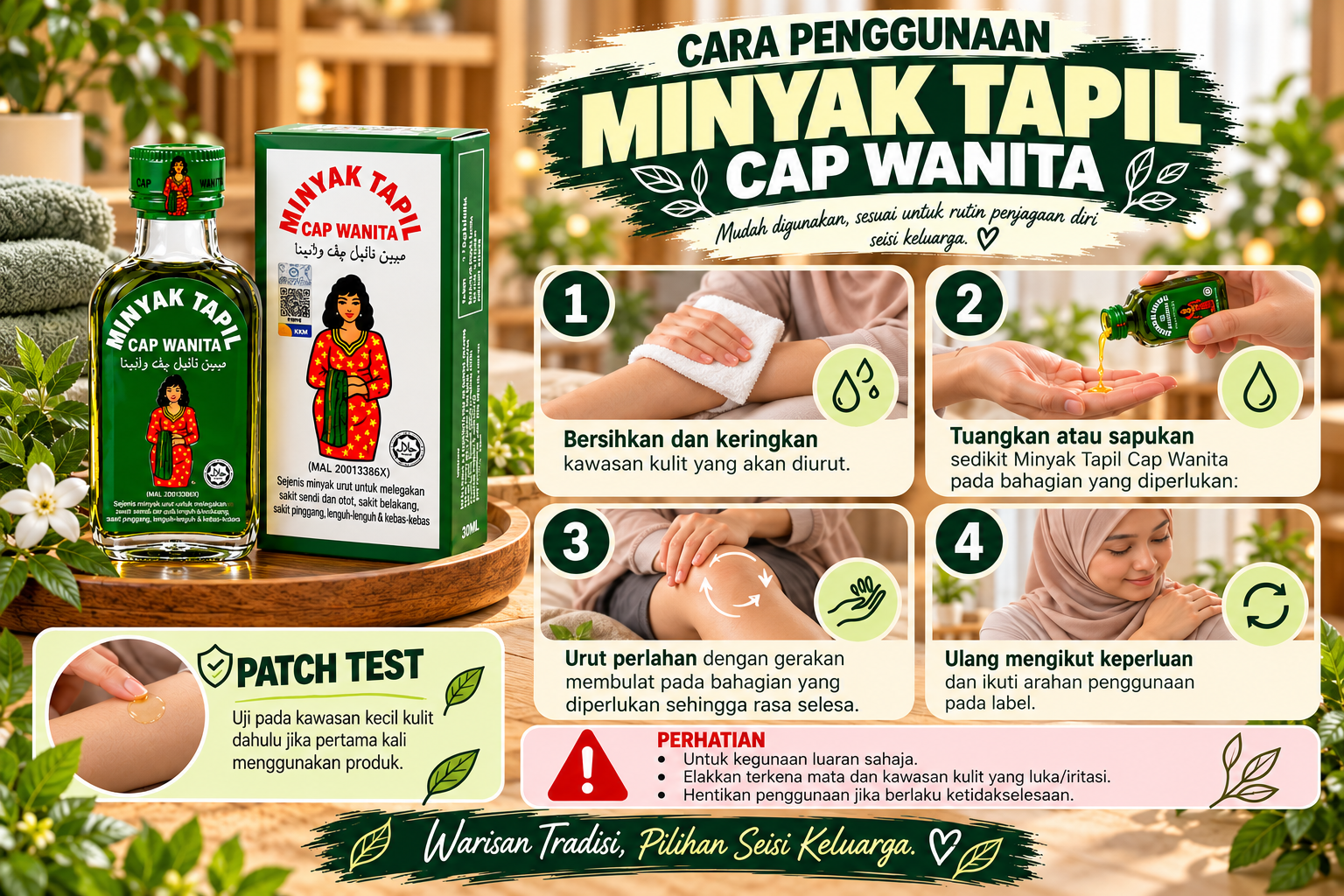
Minyak Tapil Cap Wanita Usage
How to Use Minyak Tapil 1️⃣ Clean the skin – Ensure the area is clean and dry. 2️⃣ Apply a small amount – Use on the desired area. 3️⃣ Massage gently – Massage...

Learn why the body often aches after work and how movement, rest and safe light massage can support an everyday self-care routine. The article also explains practical steps, safety limits and signs that need assessment. Minyak Tapil Cap Wanita is discussed as a label-directed topical oil, not as a substitute for diagnosis or medical treatment.
Aching after work is commonly associated with tension, overuse or repeated movement. An office worker may remain seated in one position for hours, while someone who stands, lifts or walks throughout the day repeatedly loads particular muscle groups.
Although discomfort is often noticed in the shoulders, neck, lower back and legs, the cause is not identical for everyone. Work position, fitness, workload, breaks, sleep and emotional stress can all influence how the body feels.
Muscles continue working even when the body appears still. Sitting with the head forward, standing without shifting weight or holding a tool in one position can tire the muscles. Repeated typing, bending and lifting may also overload the same area.
Good posture does not mean holding the body rigidly. Regularly changing position is often more practical. Stand up, walk briefly and move the joints gently before tension becomes pronounced.
Allow the body to shift gradually from work to rest. Walk slowly, drink enough water and use gentle stretches without forcing the range of motion. Adequate sleep also matters because fatigue can make discomfort harder to manage.
When soreness is mild and there is no injury, slow massage may be included in the routine. Pressure does not have to be strong; the aim is comfort and controlled touch, not forcing a painful area.
Seek medical assessment when pain begins suddenly, is severe, is getting worse, or occurs with swelling, redness, fever, numbness, weakness or breathing difficulty. Pain after a serious injury, or pain that does not improve, should not be dismissed as ordinary fatigue.
If a movement increases pain, stop and do not compensate by massaging harder. A healthcare professional can help distinguish everyday fatigue from an injury or another condition.
Minyak Tapil Cap Wanita may be used as an external topical oil to help the hands glide during a light after-work massage. Apply a small amount, follow the label and avoid broken or irritated skin. Stop use if an uncomfortable reaction occurs.
MedlinePlus. Muscle aches. Pautan sumber / Source link
NHS. 10 ways to reduce pain. Pautan sumber / Source link
Mayo Clinic. Muscle pain: When to see a doctor. Pautan sumber / Source link
Awang Kinchai
Updated
Information on this site is for general information only and is not a substitute for professional medical advice. Consult a qualified healthcare practitioner for any health condition.
How to Use Minyak Tapil 1️⃣ Clean the skin – Ensure the area is clean and dry. 2️⃣ Apply a small amount – Use on the desired area. 3️⃣ Massage gently – Massage...
Key points to understand A gentle shoulder routine can support relaxation, but it does not correct an undiagnosed neck or nerve problem. Work posture, screen he...
Key points to understand The giver should ask about pain, injury, surgery, pregnancy, medicines and relevant health conditions. The room should be stable, well...
Install App