When Should Massage Be Avoided? Warning Signs to Know
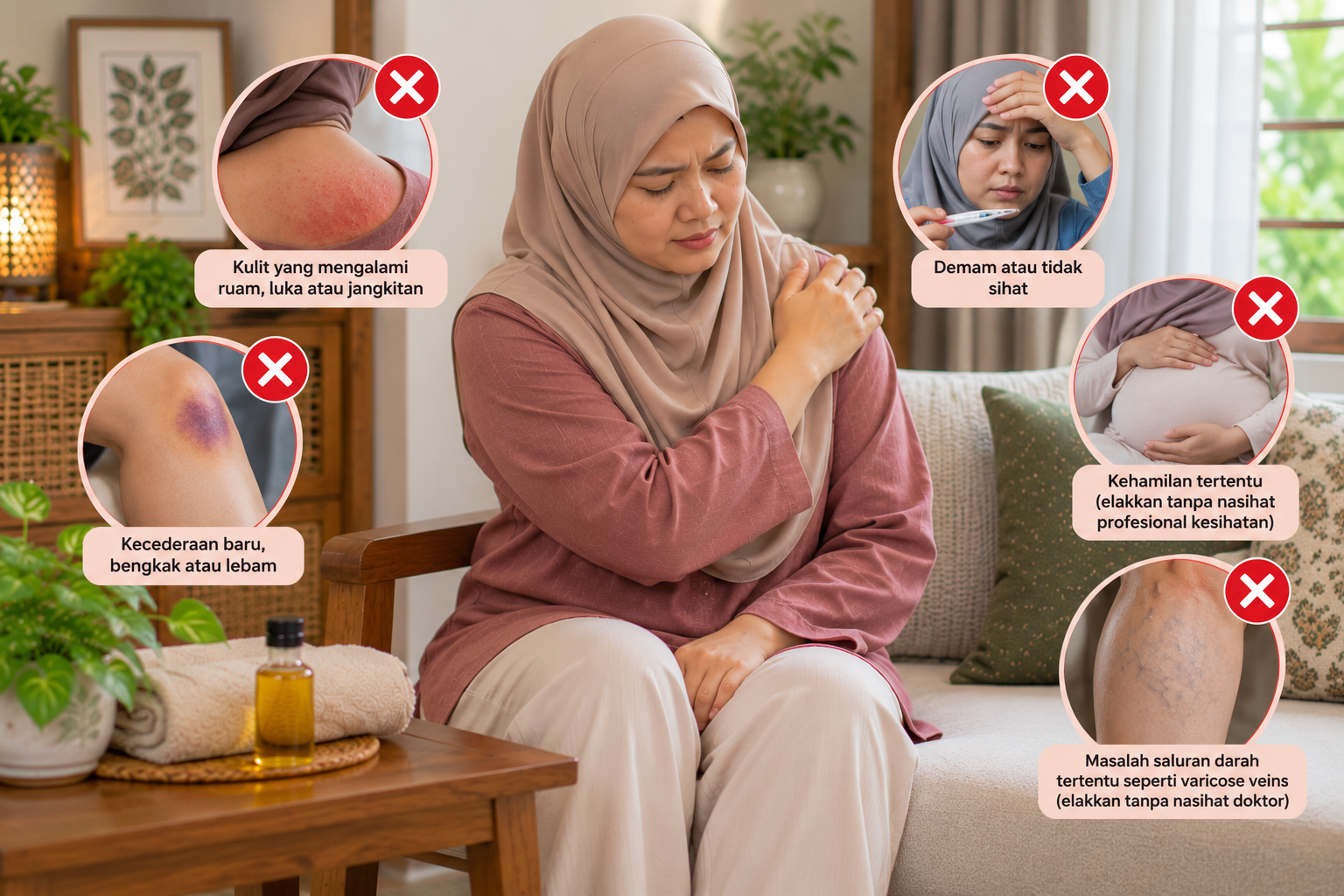
Key points to understand Local problems such as open wounds, infection, burns, recent sprains and suspected fractures should not be massaged. General warning si...
Massage traditions in Kedah, Perlis, and Penang evolved through the exchange of knowledge among families, teachers, and multicultural communities. Agriculture and physical labour also influenced daily care practices, but “northern massage” is not a single standardized method. This heritage should be practised simply, hygienically, safely, and according to the recipient’s comfort.
Kedah, Perlis, and Penang have a long history of migration, trade, and interaction among communities. In such an environment, knowledge of body care did not develop in isolation. Family techniques may have blended with the experience of other teachers, gradually evolving as they were passed down to subsequent generations.
Research on knowledge transfer among Malay traditional massage practitioners in northern Malaysia highlights the importance of how knowledge is acquired and managed. Traditional learning commonly depends on observation, practical training, and trust between teachers and trainees. Written records alone cannot easily replace hands-on experience in controlling pressure and interpreting a recipient’s responses.
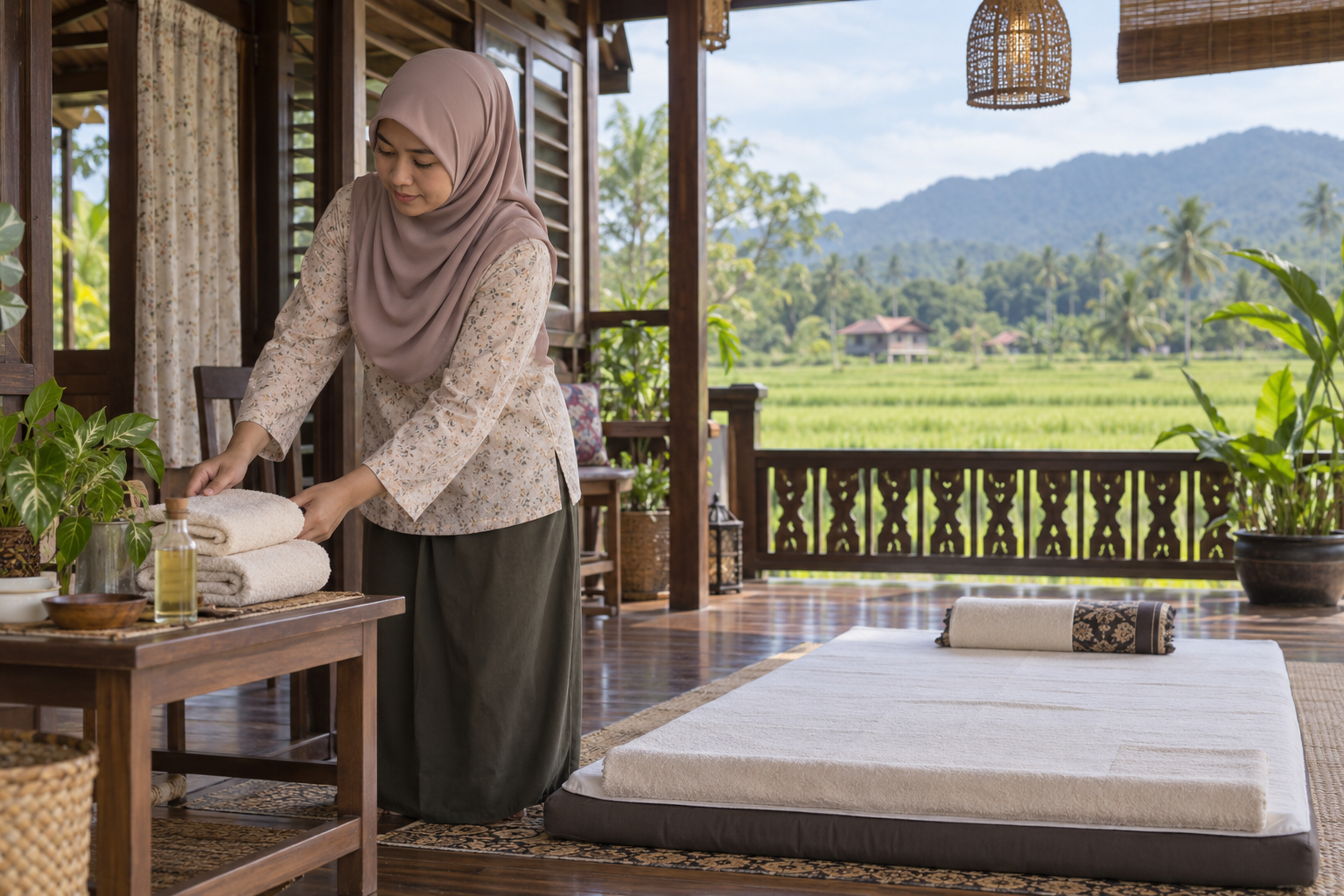
Northern Malaysia is often associated with paddy fields and agricultural activities, although its population now works across many sectors. Historically, tasks involving bending, lifting, walking along field ridges, or standing for extended periods may have made after-work massage a form of everyday care within families. The shoulders, back, and legs may be massaged for comfort.
This connection should be presented as social context, not as evidence that massage can resolve occupational injuries. Sharp pain, swelling, weakness, or persistent discomfort should be medically assessed. A comforting routine should not delay treatment for a more serious condition.
A practitioner may learn from their mother, grandmother, uncle, or a teacher from another village. Some begin with gliding strokes to warm the area before using kneading movements and localized pressure. Others perform a shorter massage because the recipient is a family member seeking comfort after daily activities.
These differences explain why the term “northern massage” should not be marketed as a single standardized protocol. Its origins may be described honestly, but the session itself should also be explained, including the body areas involved, positioning, pressure level, duration, topical products used, and whether stretching is included.
Penang represents a meeting point for various body-care traditions. Consumers may encounter Malay massage alongside massage practices from other communities. This interaction can produce spa services that combine different techniques. However, practitioners should clearly explain their training and sources without presenting a modern blend as an authentic ancient tradition.
For consumers, an ethnic or state label is not a measure of safety. Instead, consider hygiene, consent, communication, training, and the practitioner’s willingness to refer clients when a condition falls outside their expertise.
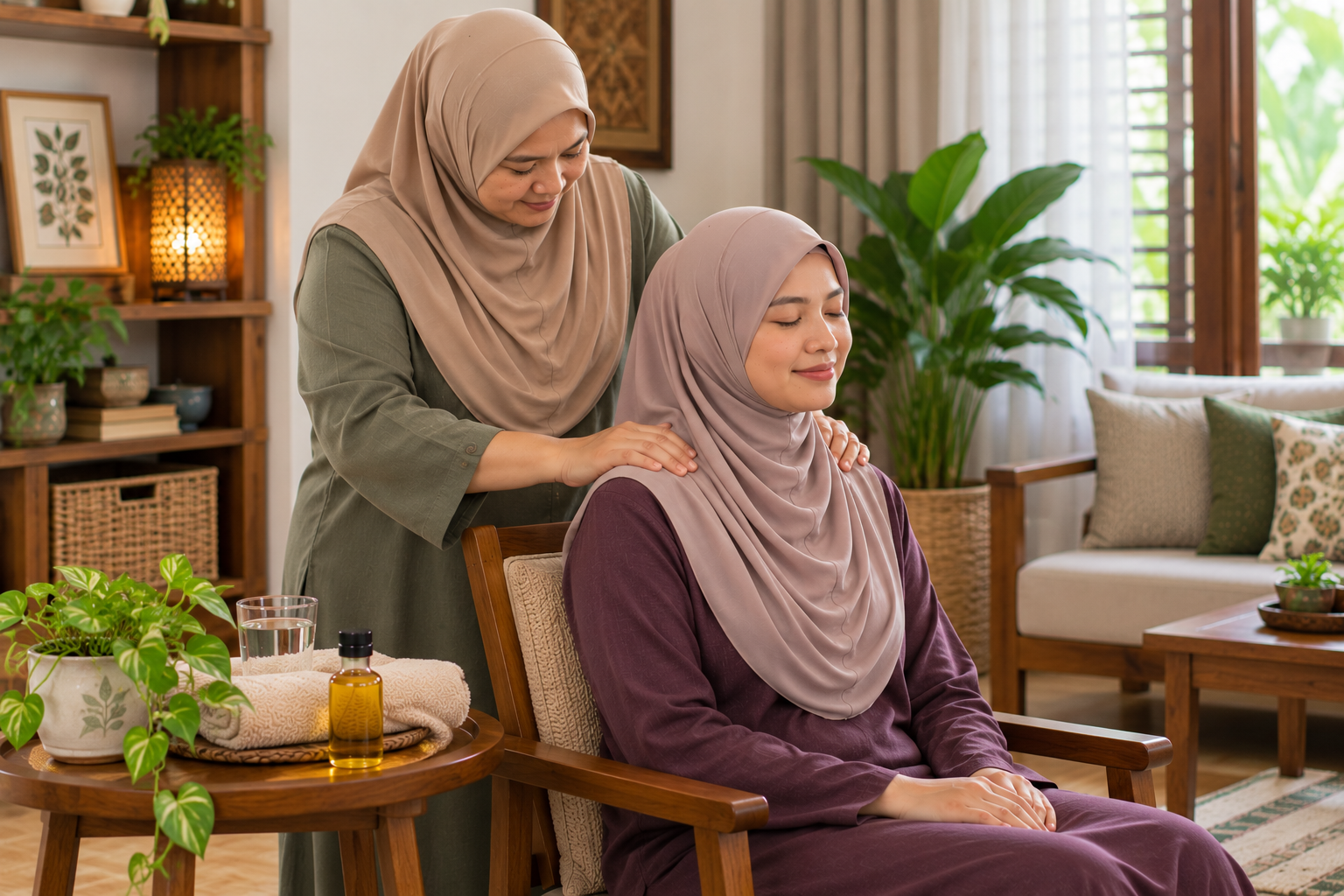
One value that can be drawn from northern traditions is simplicity: a clean space, controlled hand movements, appropriate towels, and continuous feedback. A family massage does not need to be forceful or lengthy. A few minutes of gentle movements on the shoulders or legs may be sufficient for a relaxing experience.
Minyak Tapil Cap Wanita may be introduced at the end of this routine as a topical massage oil that helps reduce friction during gentle movements, subject to the label instructions and skin suitability. Heritage becomes more meaningful when its origins are respected and its use is accompanied by safe practices.
Jimmy
Updated
Information on this site is for general information only and is not a substitute for professional medical advice. Consult a qualified healthcare practitioner for any health condition.
Key points to understand Local problems such as open wounds, infection, burns, recent sprains and suspected fractures should not be massaged. General warning si...
Key points to understand A gentle shoulder routine can support relaxation, but it does not correct an undiagnosed neck or nerve problem. Work posture, screen he...
Key points to understand The giver should ask about pain, injury, surgery, pregnancy, medicines and relevant health conditions. The room should be stable, well...
Install App