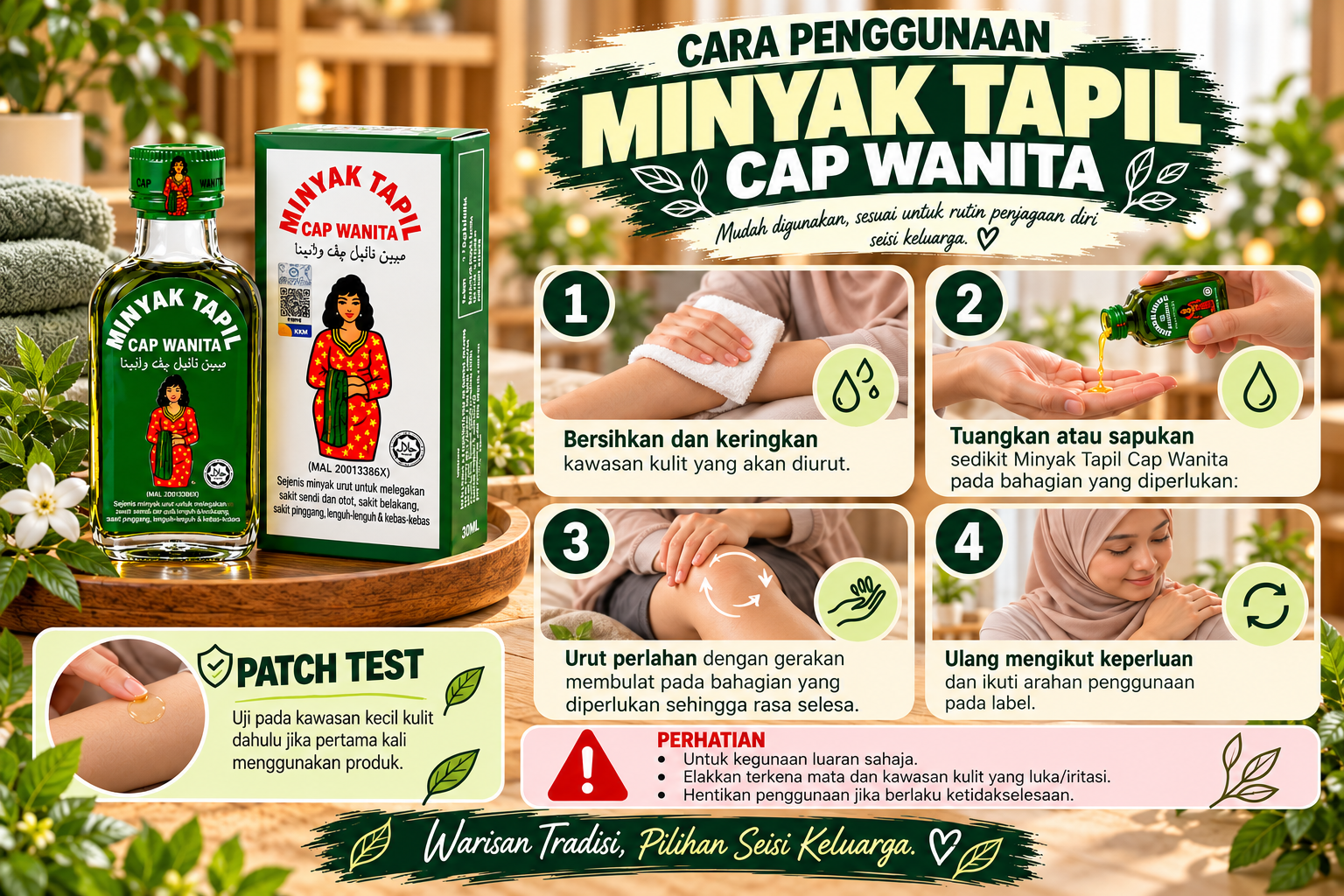
Minyak Tapil Cap Wanita Usage
How to Use Minyak Tapil 1️⃣ Clean the skin – Ensure the area is clean and dry. 2️⃣ Apply a small amount – Use on the desired area. 3️⃣ Massage gently – Massage...
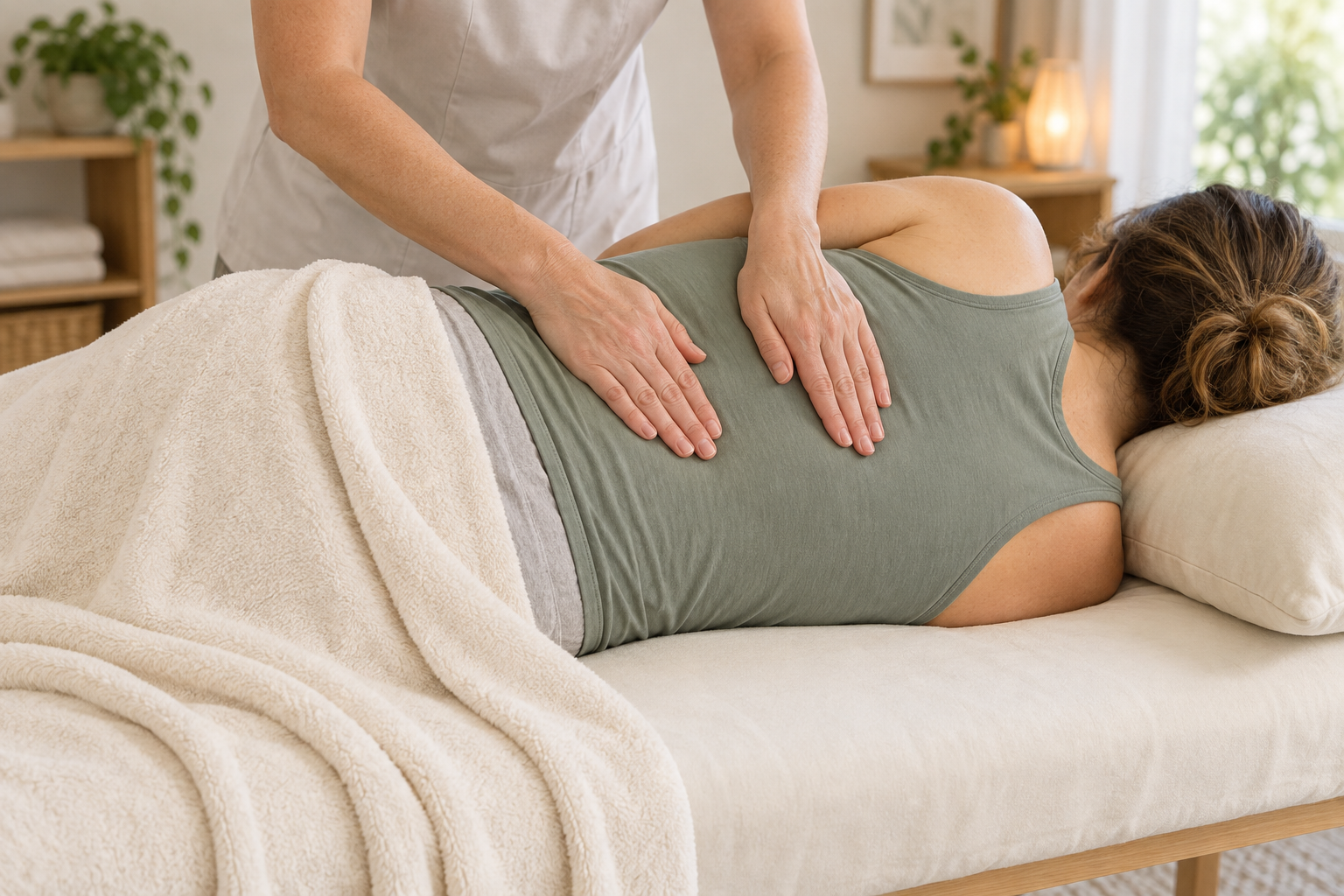
Back and lower-back massage should use broad palm contact over muscles to the left and right of the spine. A side-lying position with pillows supporting the head and knees helps maintain stability. Do not press the spine, ribs or kidney area, and avoid massage when neurological symptoms or serious injury is present.
The back and lower back may feel uncomfortable after prolonged sitting, lifting or housework. Because this broad area is difficult to reach alone, massage is often provided by a family member. Consent, comfort and communication must guide the whole session.
Massage is unsuitable after a fall, accident or suspected fracture, and where there is severe or radiating pain, numbness, weakness, fever, bladder or bowel changes, or numbness around the groin. These signs need prompt medical assessment.
Body position: Lie on the side with a pillow between the knees and another supporting the head, or sit leaning forward onto pillows. Keep the spine neutral and the body covered except for the area being massaged.
Amount of oil: Use about 6–10 drops for the back, adding small amounts only as needed. Warm it in the palms; never pour directly onto cold or sensitive skin.
Duration and pressure: Massage for 8–12 minutes. Keep the pressure light to moderate and continuously check comfort.
Areas to avoid:
Stop signs: Stop for sharp or radiating pain, numbness, weakness, dizziness, nausea, breathing difficulty or worsening discomfort.
Gentle massage should feel calm and manageable during and after the session. A stronger sensation is not proof of greater benefit. If symptoms persist, recur or interfere with normal activity, obtain advice from a qualified healthcare professional.
Minyak Tapil Cap Wanita may support smooth broad strokes over healthy back muscles. Use only a thin layer, follow the label and remember that a warming or cooling sensation is not proof that an underlying problem has healed.
1. NHS - Back pain — Source link
2. NCCIH - Chronic Pain and Complementary Health Approaches — Source link
3. NCCIH - Massage Therapy: What You Need To Know — Source link
#BackMassage #LowerBackMassage #SafeMassage #BackPain #MinyakTapilCapWanita
Cahaya Sinar
Updated
Information on this site is for general information only and is not a substitute for professional medical advice. Consult a qualified healthcare practitioner for any health condition.
How to Use Minyak Tapil 1️⃣ Clean the skin – Ensure the area is clean and dry. 2️⃣ Apply a small amount – Use on the desired area. 3️⃣ Massage gently – Massage...
Key points to understand A gentle shoulder routine can support relaxation, but it does not correct an undiagnosed neck or nerve problem. Work posture, screen he...
Key points to understand The giver should ask about pain, injury, surgery, pregnancy, medicines and relevant health conditions. The room should be stable, well...
Install App