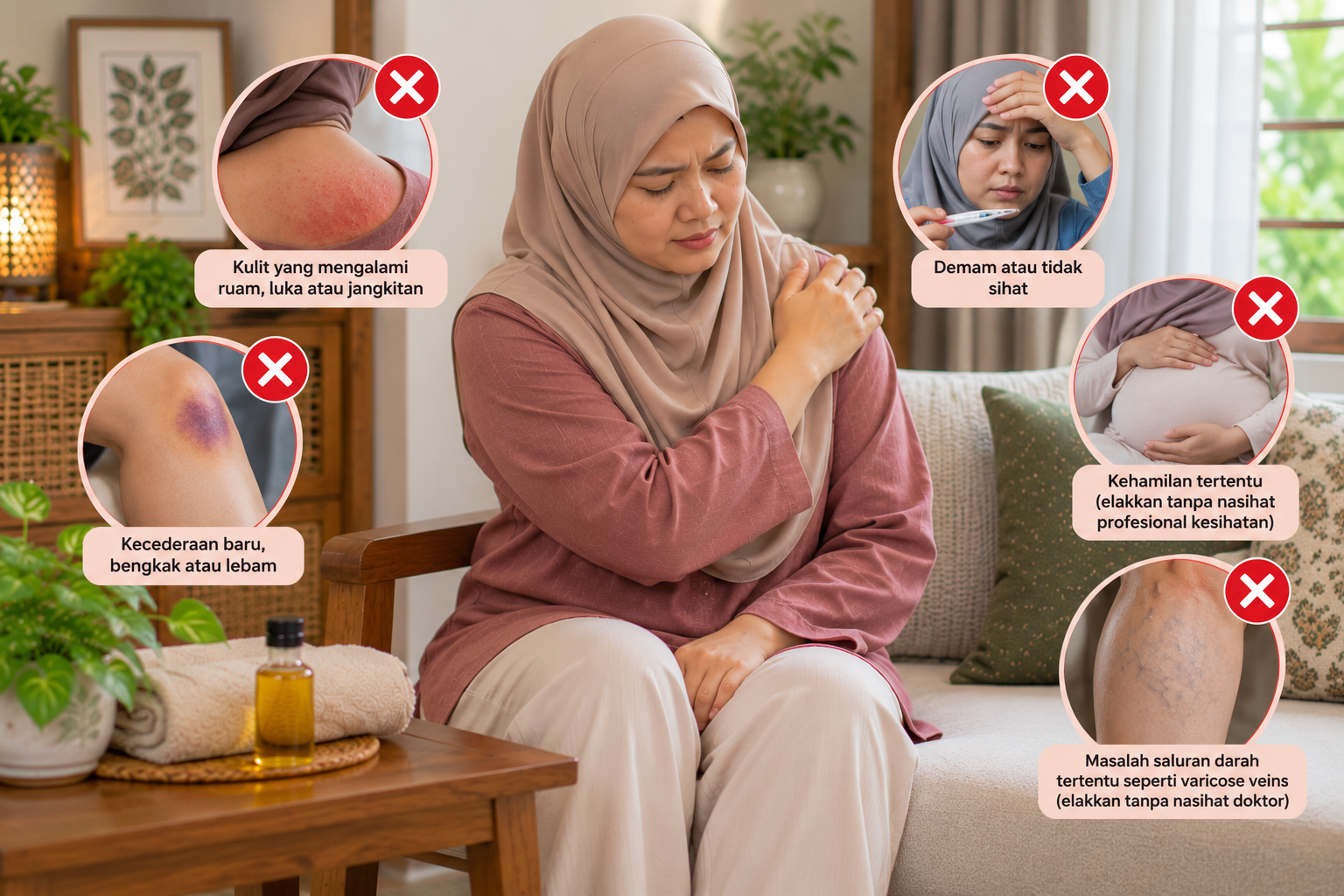
When Should Massage Be Avoided? Warning Signs to Know
Key points to understand Local problems such as open wounds, infection, burns, recent sprains and suspected fractures should not be massaged. General warning si...
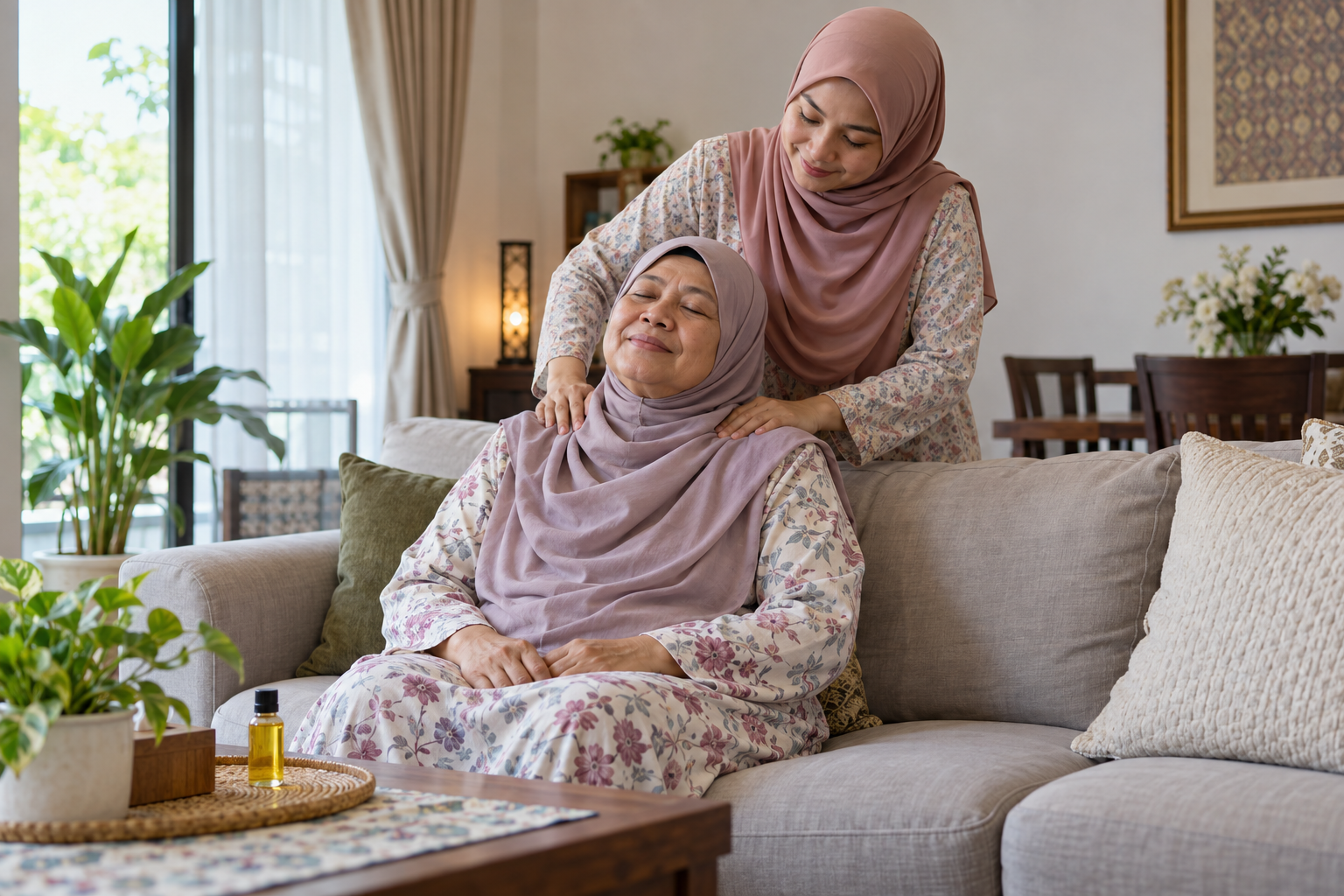
A Comfortable and Safe 15-Minute Family Massage Routine: cultural context, practical guidance, safety considerations and a gentle connection to Minyak Tapil Cap Wanita. The article also explains practical steps, safety limits and signs that need assessment. Minyak Tapil Cap Wanita is discussed as a label-directed topical oil, not as a substitute for diagnosis or medical treatment.
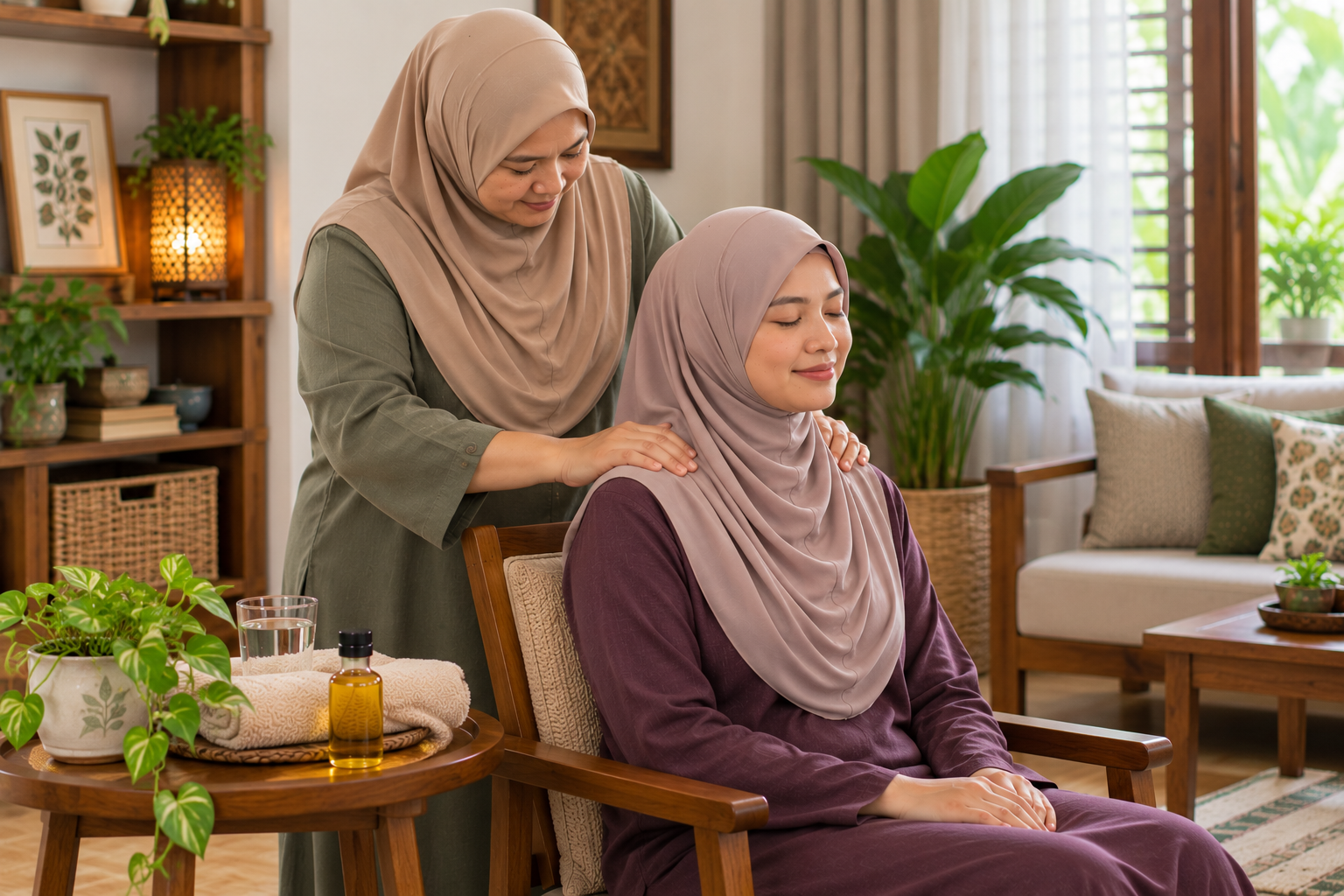
A family massage routine at home is suitable for relaxation and spending time together, not for diagnosing or treating injuries. Choose someone who is generally well and does not have a fever, wound, skin infection, unusual swelling or acute pain. If someone has recently had surgery, is pregnant or has a particular health condition, seek advice before giving them a massage.
Ask which areas they would like touched and which should be avoided. Consent matters even between spouses, parents and adult children. The person receiving the massage can stop the routine at any time.
Use a stable chair for a shoulder massage or a place to lie down that supports the body for a leg massage. Have a clean towel ready, wash your hands and keep your nails short. The room does not need to be dark; enough light helps you see the condition of the skin.
If using oil, read the label and apply a small amount to a small area first for someone using it for the first time or with sensitive skin. Avoid the eyes, mouth, broken skin and sensitive areas. Do not combine several topical products or use a heating pad.
Place your palms gently on the shoulders, away from the front of the neck. Use slow strokes from the shoulders towards the upper arms. Keep the pressure light to moderate and avoid pressing directly on the spine. After a few strokes, ask, “Is this pressure comfortable?”
For the hands, support the wrist and gently stroke the palm with your thumb. Avoid pulling the fingers or twisting the joints. If the person experiences numbness, sharp pain or weakness, stop. Do not try to “fix” the problem by applying more pressure.
Make sure the legs are supported. Use your palms for gentle strokes on the calves without pressing on areas that are swollen, tender along a vein or bruised. Do not massage a calf that suddenly becomes swollen, red, warm or painful on one side, as this needs prompt medical assessment.
On the soles of the feet, use gentle circular movements and avoid deep pressure on painful areas. People with diabetes, nerve problems, foot wounds or poor circulation should seek professional guidance before receiving a foot massage.
Ease the pressure and finish with a few long, light strokes. Wipe away excess oil if needed. Ask the person to sit up slowly and to tell you if they feel dizzy or uncomfortable. Wash your hands afterwards so the product does not get into your eyes.
Remember what felt comfortable so you can adapt the routine next time. Fifteen minutes is a guide, not a required target. Five comfortable minutes are better than a longer session that feels forced.
Minyak Tapil Cap Wanita can be used in this routine as an oil for external application to help the hands glide and provide the aroma or sensations described on its label. Use a moderate amount, stop if it irritates the skin and keep it out of children’s reach. The most valuable parts of a family routine are attentiveness, consent and touch that does not cause pain.
To use this information, start with one clear, realistic goal. Note which part of the body is involved, when the discomfort began, what you were doing beforehand and what makes it better or worse. Brief notes can help you distinguish a temporary experience from a recurring pattern. They also make it easier to explain the situation to a massage practitioner, pharmacist or doctor without drawing your own conclusions about the cause.
Make one change at a time so it is easier to assess how the body responds. If you choose massage, begin with light pressure, ask for consent and stop if touch causes sharp pain, numbness, dizziness or a feeling of being unsafe. If using a topical oil, read its actual label, apply it only to suitable skin and wash your hands afterwards. More oil or stronger pressure does not necessarily make the experience better.
Awang Kinchai
Updated
Information on this site is for general information only and is not a substitute for professional medical advice. Consult a qualified healthcare practitioner for any health condition.
Key points to understand Local problems such as open wounds, infection, burns, recent sprains and suspected fractures should not be massaged. General warning si...
Key points to understand A gentle shoulder routine can support relaxation, but it does not correct an undiagnosed neck or nerve problem. Work posture, screen he...
Key points to understand The giver should ask about pain, injury, surgery, pregnancy, medicines and relevant health conditions. The room should be stable, well...
Install App