When Should Massage Be Avoided? Warning Signs to Know
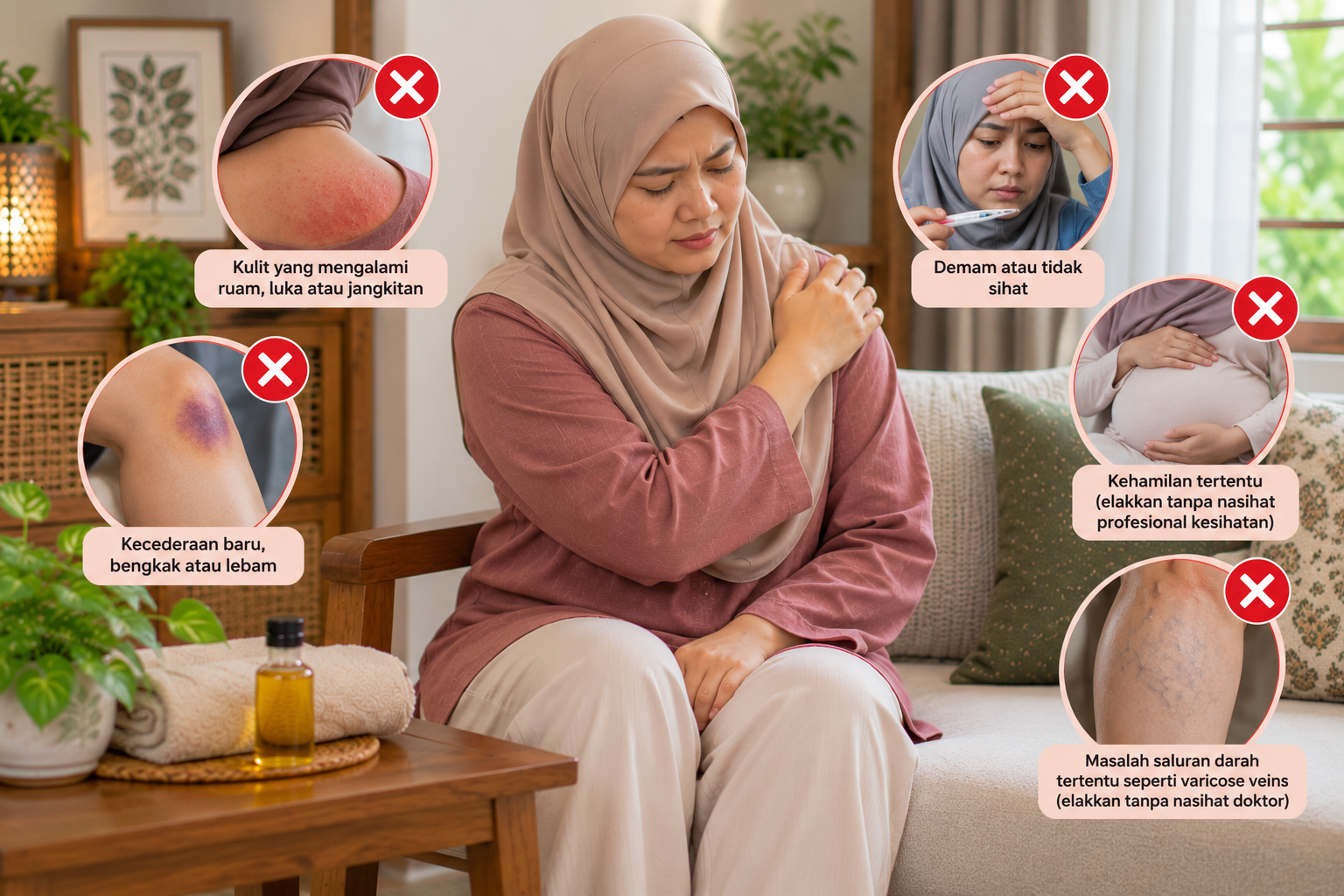
Key points to understand Local problems such as open wounds, infection, burns, recent sprains and suspected fractures should not be massaged. General warning si...
Massage traditions in Sabah and Sarawak vary according to local communities, environments, and lifestyles, and may evolve through cultural exchange. This heritage should be documented ethically without medical claims. Consumers should assess practitioners based on professionalism. Minyak Tapil Cap Wanita is suitable for general massage but should not represent specific traditions without community collaboration.
Sabah and Sarawak are home to hundreds of communities, languages, and distinct local histories. Each community and ethnic group has its own customs, which influence everyday life. Therefore, terms such as “Sabah massage” or “Sarawak massage” are too broad if they imply that all residents practise the same methods. A particular technique may be unique to a specific family, village, or community and may not be known elsewhere.
Because Sabah and Sarawak are culturally and ethnically diverse, some massage traditions may merge or integrate to form new practices. These evolving customs may become part of Sabah and Sarawak’s unique identities, distinguishing them from massage traditions in other regions.
In many societies, body-care practices develop through relationships with family, daily work, and the surrounding environment. Touch, bathing, compresses, or the use of certain plants may be practised in specific contexts. Traditionally, local communities in Sabah and Sarawak have lived in close connection with their environment. Coastal communities often depend on maritime and fishing activities, while inland communities rely more on forestry activities and local herbs. Therefore, massage traditions in these regions are influenced by the lifestyles of particular communities.
However, these practices should not be separated from the individuals who hold the original knowledge and then marketed as though all their elements can be freely mixed. Interviews, community consent, and clear attribution are essential when a brand wishes to share a specific tradition. Some knowledge may be openly shared, while other knowledge has cultural boundaries.
Recording that a community uses certain forms of touch or particular ingredients is a form of documentation. Claiming that such practices can treat diseases is a separate matter that requires evidence. The two should not be confused. Heritage stories can be published without promising clinical results.
If practitioners use traditional terms to describe massage techniques and their effects on the body, these explanations may be understood as part of the local cultural framework rather than as appropriate medical solutions. Medical assessment remains necessary for injuries, infections, severe pain, or sudden symptoms.
Many people from Sabah and Sarawak study or work in Peninsular Malaysia, while practitioners from other regions also relocate to Borneo. These exchanges have created a diverse range of modern services. A massage centre in Kota Kinabalu or Kuching may offer Malay massage, Swedish massage, or spa treatments without claiming that all of them originate from local traditions.
Consumers should consider a practitioner’s training, communication, and hygiene standards. A person should not be assumed to be more skilled simply because they wear traditional clothing or use the name of a particular community. Professionalism must be demonstrated through practice.
Minyak Tapil Cap Wanita is a topical oil intended for general massage. It should not be presented as representing a specific Sabah or Sarawak tradition without supporting evidence and collaboration with the relevant communities. This measured approach respects the dignity of cultural heritage while allowing the product to be associated with touch-based routines in a safe and honest manner.
Jimmy
Updated
Information on this site is for general information only and is not a substitute for professional medical advice. Consult a qualified healthcare practitioner for any health condition.
Key points to understand Local problems such as open wounds, infection, burns, recent sprains and suspected fractures should not be massaged. General warning si...
Key points to understand A gentle shoulder routine can support relaxation, but it does not correct an undiagnosed neck or nerve problem. Work posture, screen he...
Key points to understand The giver should ask about pain, injury, surgery, pregnancy, medicines and relevant health conditions. The room should be stable, well...
Install App