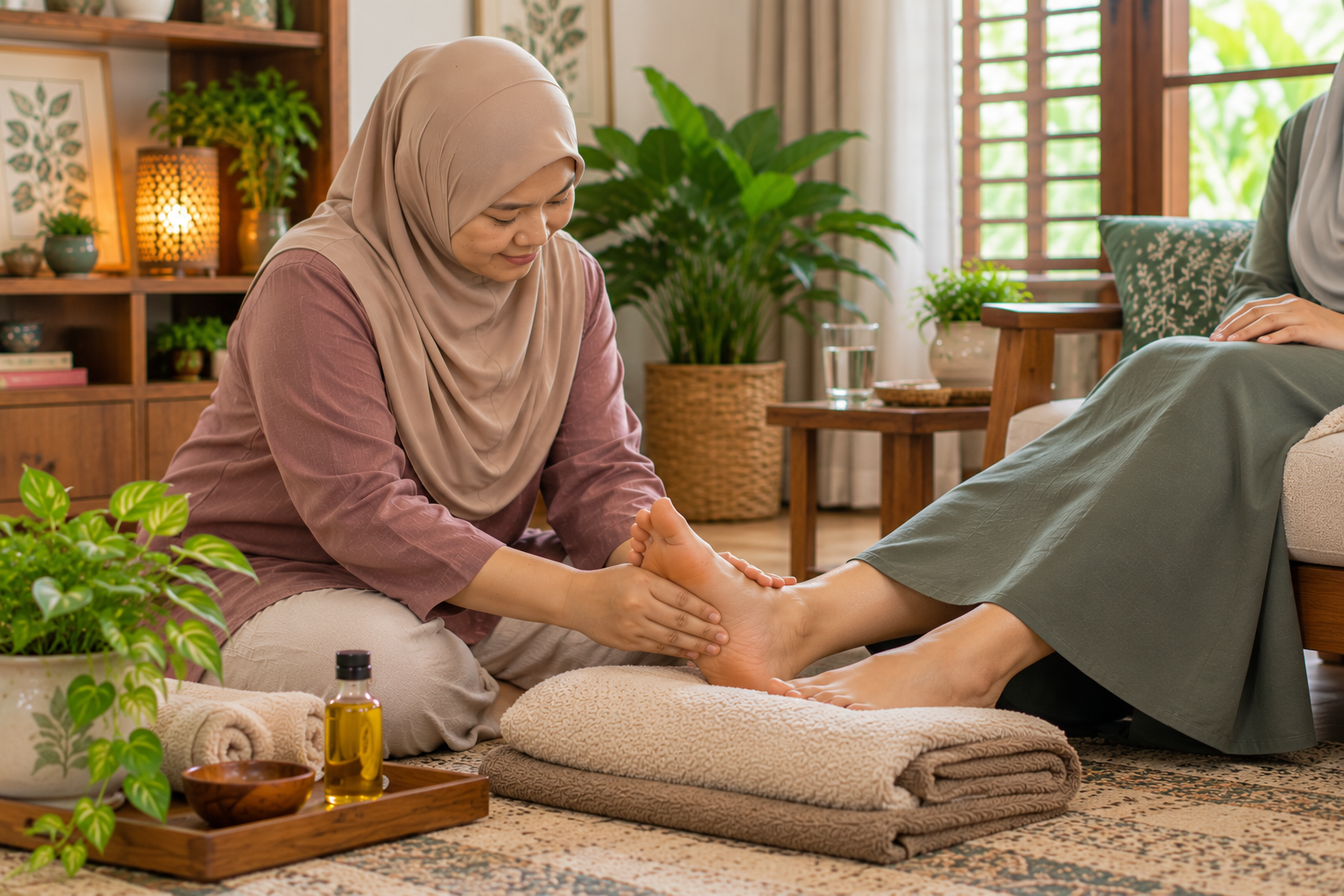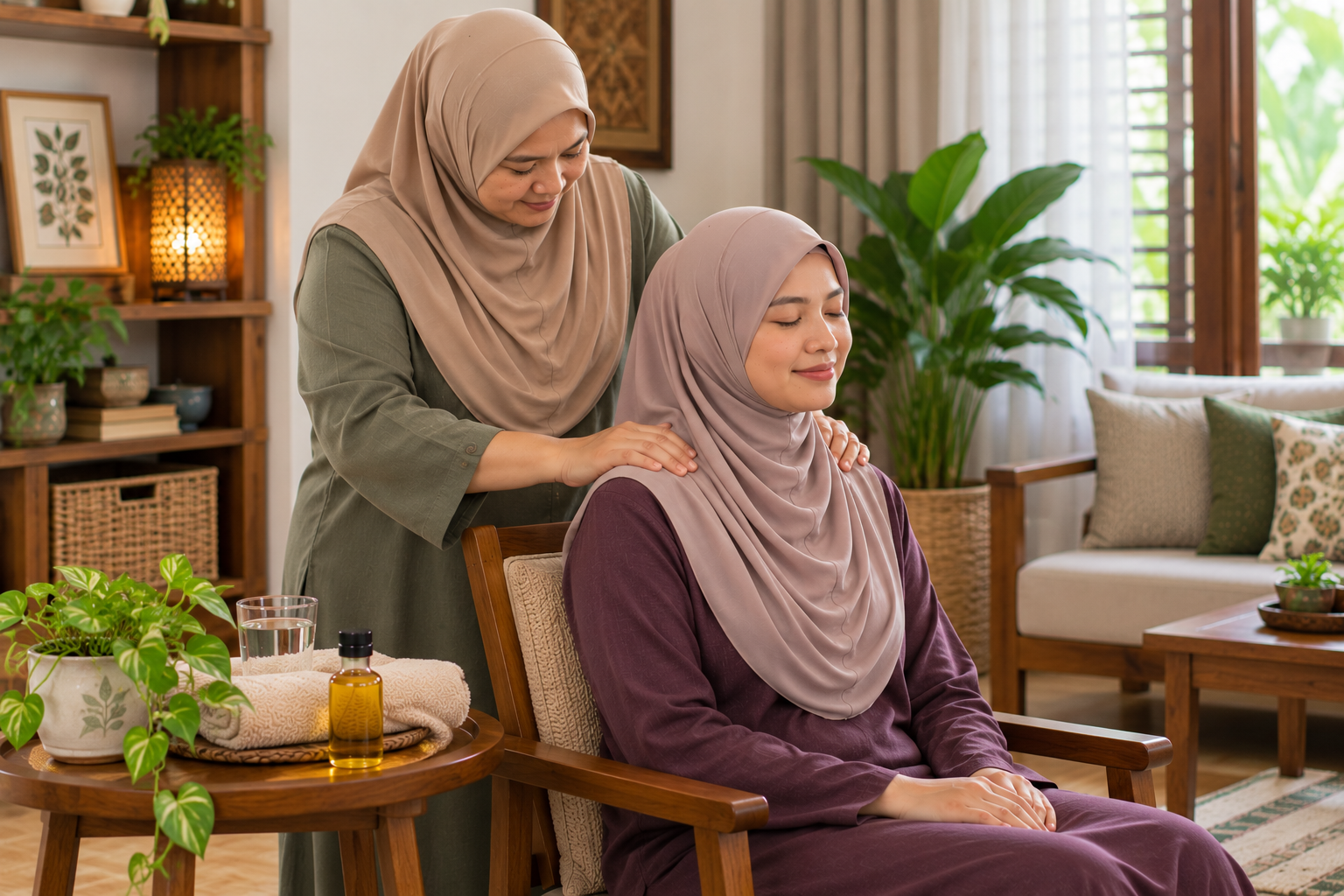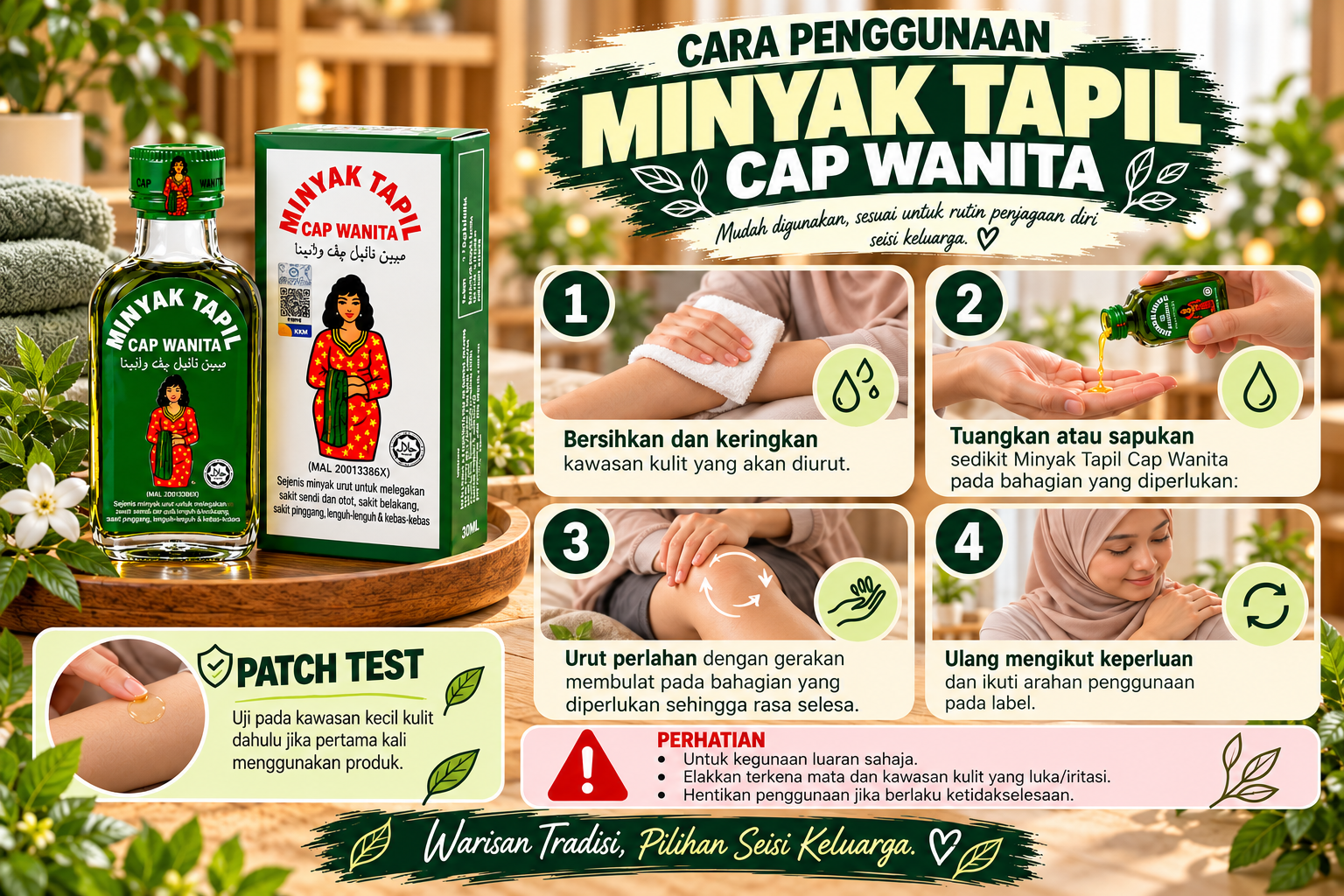
Minyak Tapil Cap Wanita Usage
How to Use Minyak Tapil 1️⃣ Clean the skin – Ensure the area is clean and dry. 2️⃣ Apply a small amount – Use on the desired area. 3️⃣ Massage gently – Massage...
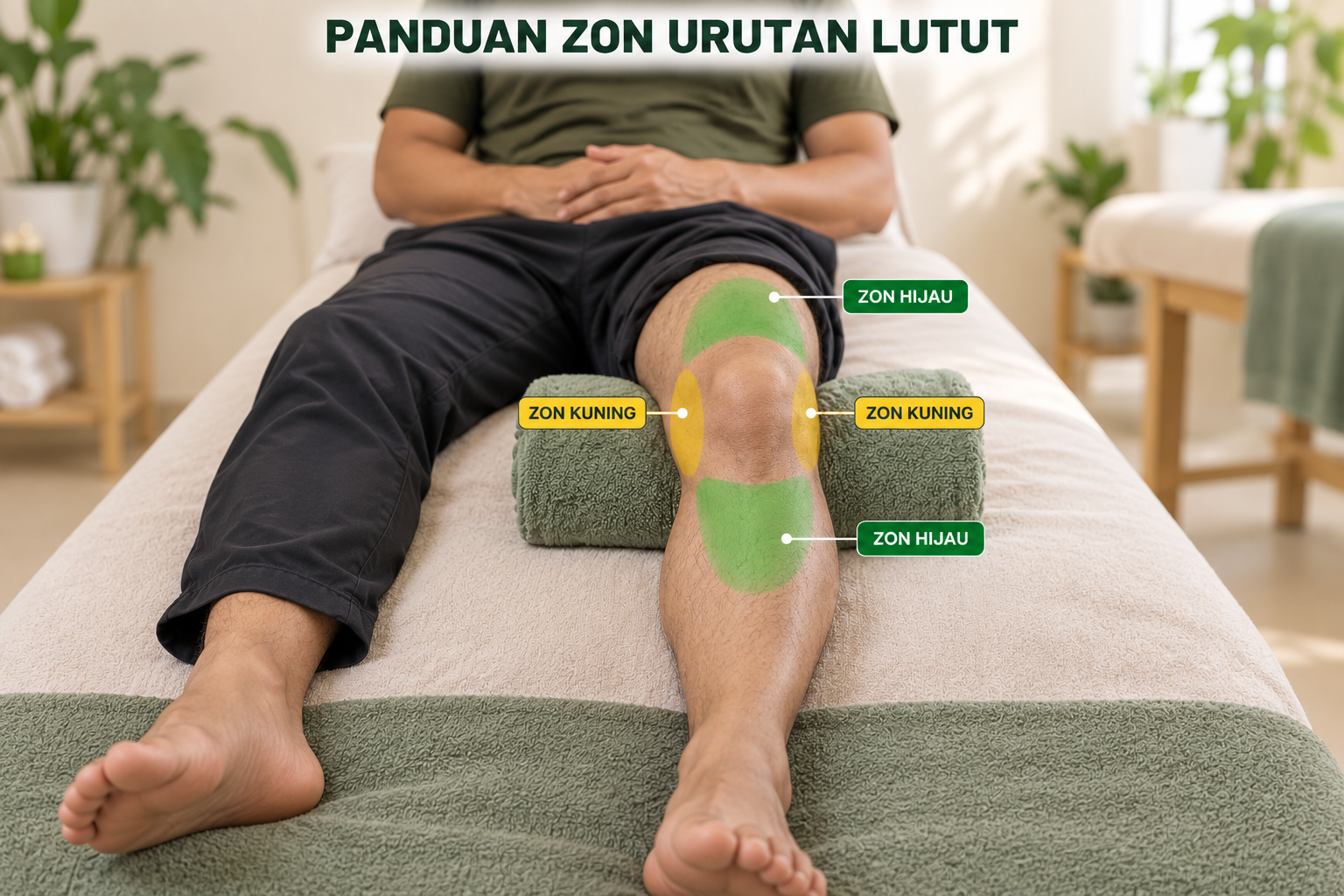
Massage around the knee should focus on the muscles above and below the joint using light pressure. Do not press the kneecap, joint line or back-of-knee crease. Sudden swelling, redness, heat, an injury sound or inability to bear weight requires assessment before any massage is attempted.
The knee is a joint rather than a thick muscle area. Massage should therefore focus on soft tissue above, below and beside it—not directly on the kneecap. Gentle touch may feel comfortable after ordinary activity but cannot repair ligament, meniscus or joint injuries.
Do not massage a knee that is swollen, red, hot, locked, unable to bear weight or painful after a fall. Medical assessment is more important than attempting to press the pain away.
Body position: Sit or lie down with a rolled towel supporting the slightly bent knee. Let the whole leg relax rather than hang unsupported.
Amount of oil: Use 2–4 drops around one knee. The target is small, so only a little is needed. Keep it away from wounds and newly injured skin.
Duration and pressure: Massage for 3–5 minutes. Very light pressure is best around a joint; never push through pain.
Areas to avoid:
Stop signs: Stop if the knee feels unstable or locked, pain becomes sharp, swelling increases, skin colour changes or the leg becomes numb.
Gentle massage should feel calm and manageable during and after the session. A stronger sensation is not proof of greater benefit. If symptoms persist, recur or interfere with normal activity, obtain advice from a qualified healthcare professional.
A little Minyak Tapil Cap Wanita may reduce friction over the muscles above and below the knee. Avoid an inflamed joint and do not treat a hot or cool sensation as evidence of recovery.
1. NHS - Knee pain — Source link
2. NCCIH - Massage and knee osteoarthritis symptoms — Source link
3. NCCIH - Massage Therapy: What You Need To Know — Source link
#KneeMassage #KneeCare #KneeHealth #AroundTheKneeMassage #GentleMassage #SafeMassageTechnique #MassageSafety #KneeJoint #KneeMuscles #PostActivityCare #JointCare #TopicalOil #TraditionalMassageOil #SelfCareRoutine #MinyakTapilCapWanita
Cahaya Sinar
Updated
Information on this site is for general information only and is not a substitute for professional medical advice. Consult a qualified healthcare practitioner for any health condition.
How to Use Minyak Tapil 1️⃣ Clean the skin – Ensure the area is clean and dry. 2️⃣ Apply a small amount – Use on the desired area. 3️⃣ Massage gently – Massage...
Key points to understand A supported, gentle routine may feel comfortable when tiredness is ordinary and both legs appear normal. It is not appropriate to massa...
Key points to understand A gentle shoulder routine can support relaxation, but it does not correct an undiagnosed neck or nerve problem. Work posture, screen he...
Install App