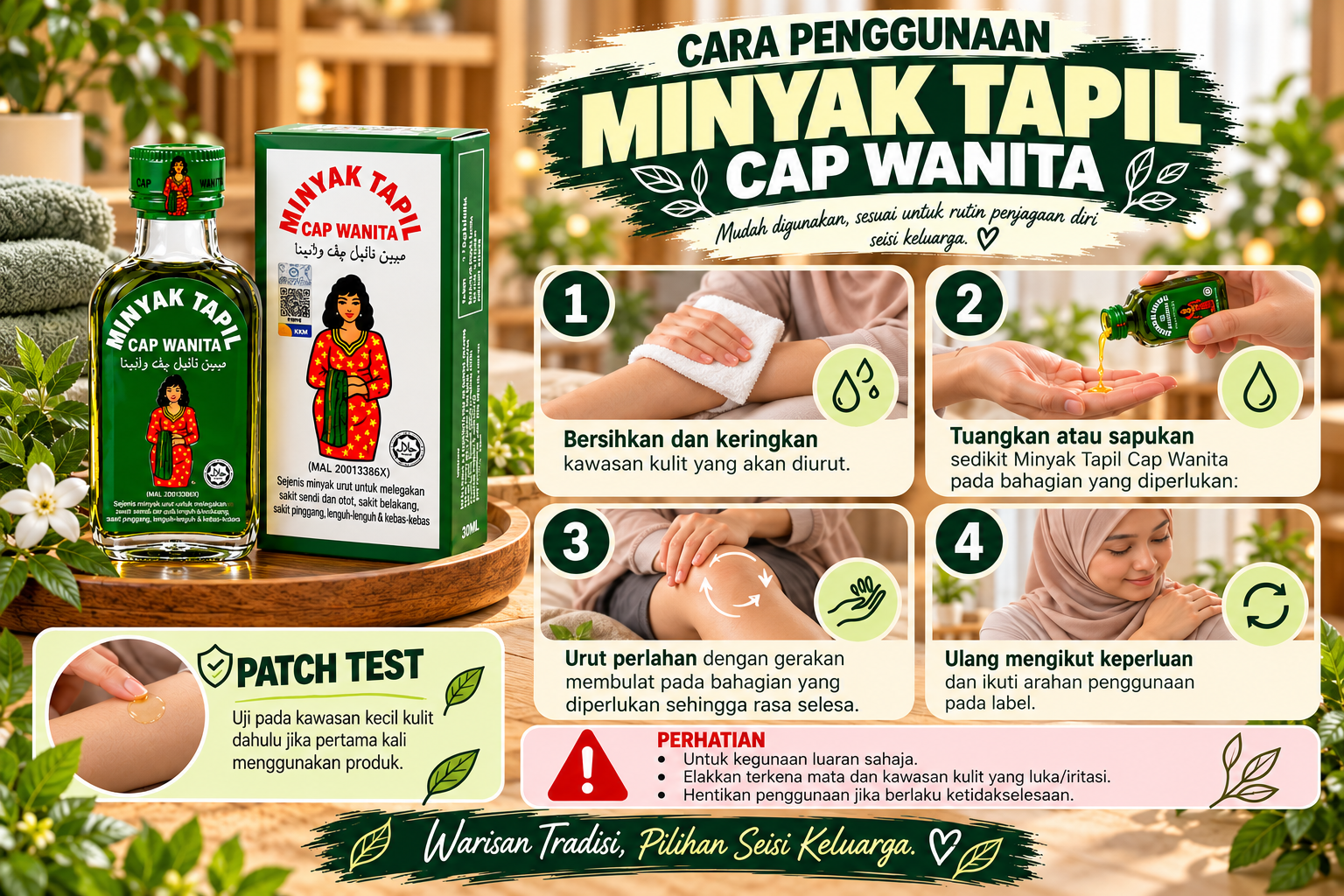
Minyak Tapil Cap Wanita Usage
How to Use Minyak Tapil 1️⃣ Clean the skin – Ensure the area is clean and dry. 2️⃣ Apply a small amount – Use on the desired area. 3️⃣ Massage gently – Massage...
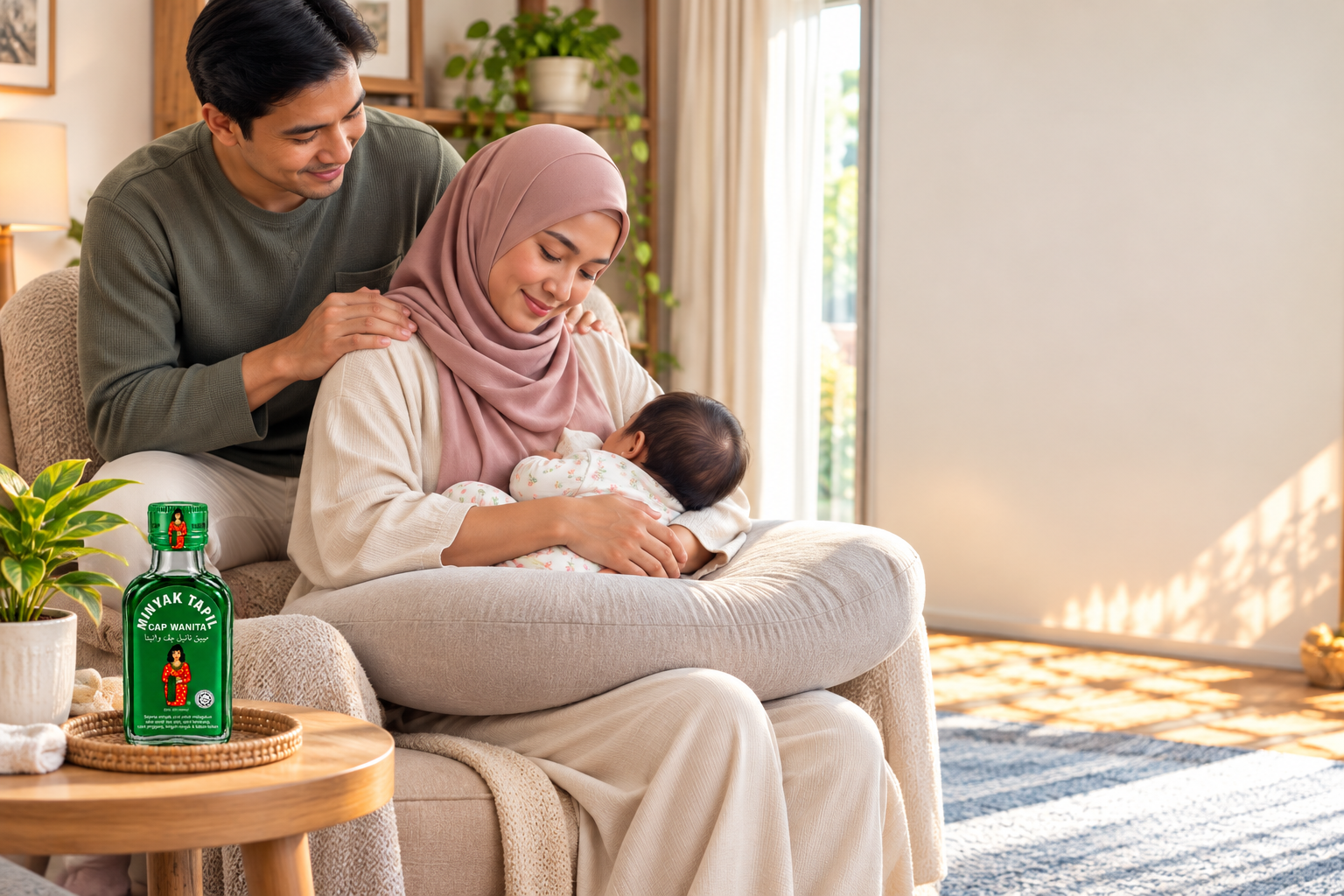
Days 15-20 may bring aches from feeding, carrying and interrupted sleep. Protect the body with supportive pillows, better lifting technique, position changes and micro-breaks. Minyak Tapil may complement gentle strokes on healthy skin, but stop if pain or a skin reaction increases. #BreastfeedingPosture #BodyAches #MinyakTapil
Between Days 15 and 20, baby-care routines become frequent while the mother's body is still recovering. Feeding, carrying, changing nappies and waking at night can leave the shoulders, neck, arms, wrists and back feeling tired. This discomfort is often linked to positions held for too long. A useful response begins by changing how tasks are performed rather than depending on oil or massage alone. During feeding, bring the baby towards the body with pillows and support the elbows. Avoid lowering the head for long periods to watch the baby. Release raised shoulders and support both feet.
When lifting the baby, keep the baby close, bend the knees when necessary and avoid suddenly twisting the waist. Let another person take over when the hands feel weak or the mother is excessively sleepy. Micro-breaks lasting one or two minutes can be taken several times daily. Place the baby in a safe location, sit upright and move the shoulders gently backwards. Open and close the fingers, straighten the wrists and change the position of the legs. These movements do not need a large range. If pain increases or numbness, tingling or weakness appears, stop the activity and seek health advice.
Minyak Tapil Cap Wanita may help the hands glide during light strokes on the shoulders, arms or soles. Apply a thin layer to healthy skin and begin with a small area. A warm or cool sensation does not mean that an internal problem is healing. Judge suitability through the skin and body's response. Do not use it on breasts, nipples, wounds, stitches, a painful abdomen, inflamed skin or an area that will have close contact with the baby. When a family member helps, the mother must control the pressure and area of touch. Slow palm strokes are generally easier to regulate than deep thumb pressure.
Avoid pressing the front of the neck, spine, joints, the back of the knee and prominent veins. Five to ten minutes on one or two areas is sufficient. Massage that leaves bruises or causes pain afterwards is not gentle massage. Some symptoms should not be dismissed as ordinary aches. A severe headache, visual disturbance, shortness of breath, chest pain, fever, heavy bleeding, worsening wound pain, or one leg becoming swollen and hot requires prompt assessment. Do not attempt to “remove” these symptoms with topical application or massage. Keep contact details for the clinic, hospital and a support person available so action is not delayed.
Days 15 to 20 are an opportunity to build a routine that protects the body while caring for the baby. Use supportive equipment, share tasks, change positions and rest before discomfort becomes intense. Minyak Tapil can be a modest complement when the skin is suitable, but posture, rest and practical help address the causes of everyday tension more effectively.
Daily progress checklist: assess energy before activity, choose only one extra task and plan a rest afterwards. Keep walking paths dry, wear stable footwear and let a caregiver hold the baby while the mother concentrates on movement. Compare bleeding, pain, pelvic pressure, wounds and fatigue before and after the routine. If symptoms increase that day or the next morning, return to an easier level. A topical oil should never be used to push the body through activity. Keep brief notes for the postnatal check so repeated changes can be explained clearly to a healthcare professional.
#Days15To20 #BreastfeedingMother #BodyAches #MinyakTapilCapWanita #FeedingPosture
Cahaya Sinar
Updated
Information on this site is for general information only and is not a substitute for professional medical advice. Consult a qualified healthcare practitioner for any health condition.
How to Use Minyak Tapil 1️⃣ Clean the skin – Ensure the area is clean and dry. 2️⃣ Apply a small amount – Use on the desired area. 3️⃣ Massage gently – Massage...
Key points to understand A gentle shoulder routine can support relaxation, but it does not correct an undiagnosed neck or nerve problem. Work posture, screen he...
Key points to understand The giver should ask about pain, injury, surgery, pregnancy, medicines and relevant health conditions. The room should be stable, well...
Install App