Confinement Days 8-10: A Simple and Safe Self-Care Routine
By Days 8 to 10, a household routine often begins to take shape. A mother may be learning her baby's sleeping and feeding patterns, yet remain easily fatigued b...

05/20 - Days 11-14 may bring shoulder, hand and foot fatigue from repeated feeding and baby-carrying positions. Improve posture, use support and consider a light application of Minyak Tapil on healthy skin. Avoid massage when there is numbness, sharp pain or swelling in one leg.
Days 11 to 14 often bring a different set of physical challenges. A mother may be feeding, changing, carrying and settling her baby more frequently. These tasks look gentle, but they are repeated in similar positions. The shoulders may rise, wrists bend, the back curve forward and the feet remain still for too long. The resulting discomfort usually calls for postural change, rest and support rather than strong massage pressure. Begin by improving the feeding area. Use pillows to bring the baby towards the mother so that she does not need to lean forward for long periods. Support both feet and let the shoulders relax.
Change positions occasionally when comfortable and permitted. If hand or wrist pain increases while lifting the baby, ask for help and review the technique with a nurse, midwife or lactation professional. For the shoulders, light strokes can move from the outer neck towards the shoulder, while avoiding pressure on the front of the neck and the spine. For the arms, use the palm to glide slowly from the wrist towards the upper arm without pressing on joints. The palm of the hand may receive small thumb circles. Every movement should remain comfortable; sharp pain, numbness or weakness is a reason to stop and obtain assessment.
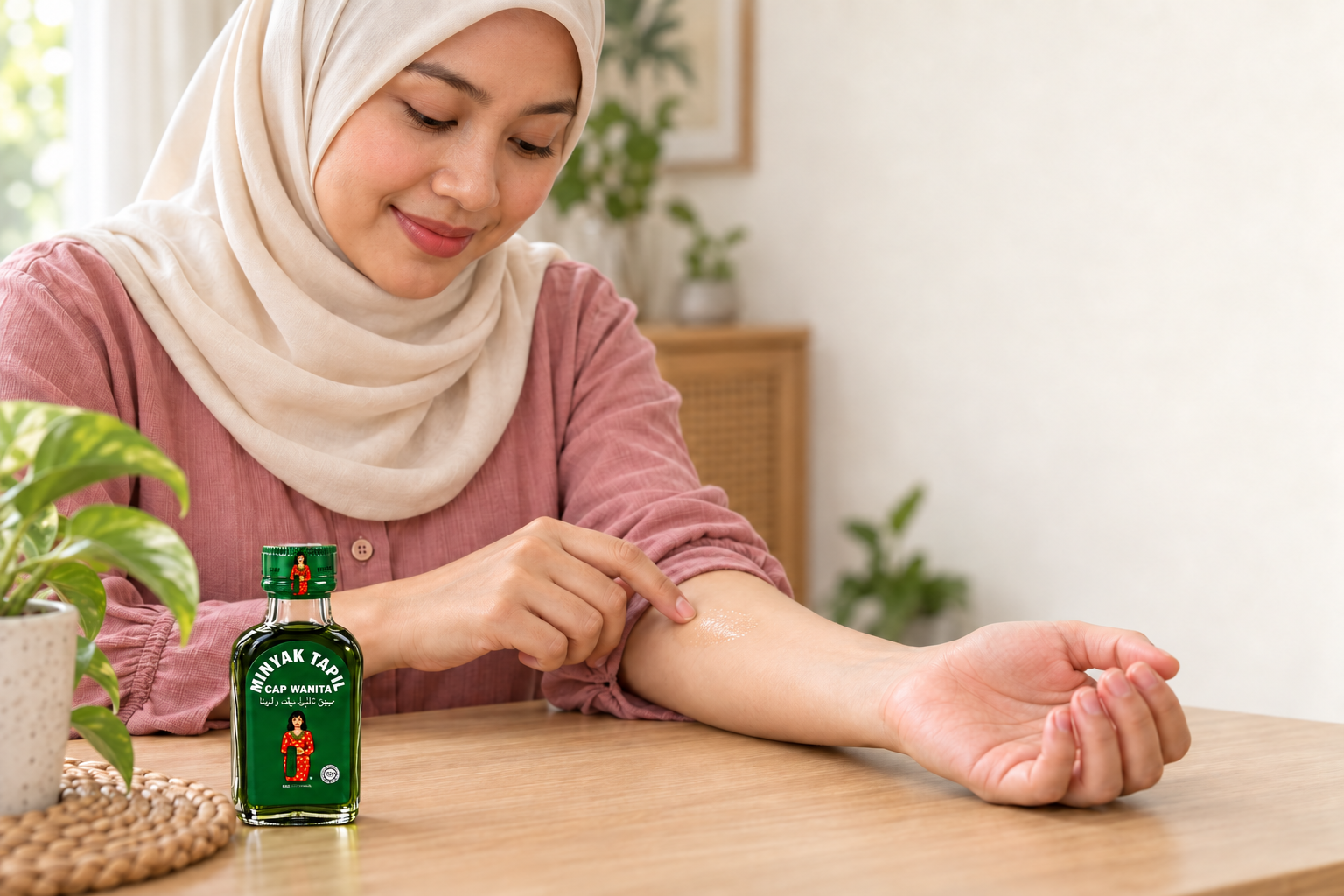
Minyak Tapil Cap Wanita may be used sparingly to reduce friction when stroking healthy skin. Perform a patch test if one has not been done since the birth. Use only a small amount so the skin is not excessively slippery when the mother needs to hold her baby. After the session, wash hands with soap before touching the baby or feeding equipment. Do not apply the product to breasts, nipples, rashes, wounds or inflamed skin. The feet may also feel tired from standing, sitting or walking with an altered pattern.
Move the toes and ankles gently, support the feet while seated and avoid remaining in one position for too long. Light strokes on the soles are acceptable when there are no wounds, numbness or swelling. The calf must not be massaged if one leg becomes more swollen, red, hot or painful than the other. This requires urgent assessment because blood clots are a recognized postpartum risk. A practical routine can take five to ten minutes: one minute to check the mother's condition, two minutes to correct posture and breathe, a few minutes of light strokes on one area, and a final minute to reassess.
Stop if the mother becomes dizzy, nauseated, more painful or uncomfortable with the product's scent or sensation. The routine does not have to be repeated every day when the body needs rest. Approaching the end of the second week, a mother may feel pressure to become active again. Activity should still increase gradually. Shoulder, hand and foot comfort is easier to maintain when tasks are shared, posture is improved and breaks are taken before pain becomes strong. Minyak Tapil can complement light application, but family support and better body positioning during baby care provide broader benefits to the daily routine.
Pre-routine checklist: confirm that the mother is alert, stable and consenting; there is no fever, unusual bleeding, breathlessness or chest pain; the intended area is free from wounds, rash, numbness and swelling; the baby is in a safe place; and hands and equipment are clean. Start with the shortest duration and lightest pressure. Keep water and a phone nearby. Record any change afterwards, including skin redness, dizziness, increasing pain or bleeding. When uncertain, postpone the application and contact a healthcare professional. Choosing not to use an oil on a particular day is also a valid self-care decision.
#Days11To14 #BreastfeedingShoulders #GentleMassage #MinyakTapilCapWanita #MaternalCare
Noor Bulan
Updated
Information on this site is for general information only and is not a substitute for professional medical advice. Consult a qualified healthcare practitioner for any health condition.
By Days 8 to 10, a household routine often begins to take shape. A mother may be learning her baby's sleeping and feeding patterns, yet remain easily fatigued b...
By Days 4 to 7, some mothers begin to feel more confident moving and caring for their babies, but the body is still in early recovery. Postpartum bleeding, disc...
The first three days after childbirth are an extremely early stage of recovery. The mother's body is adjusting after birth while the healthcare team monitors bl...
Install App