Confinement Days 15-20: Managing Body Aches from Breastfeeding and Carrying a Baby
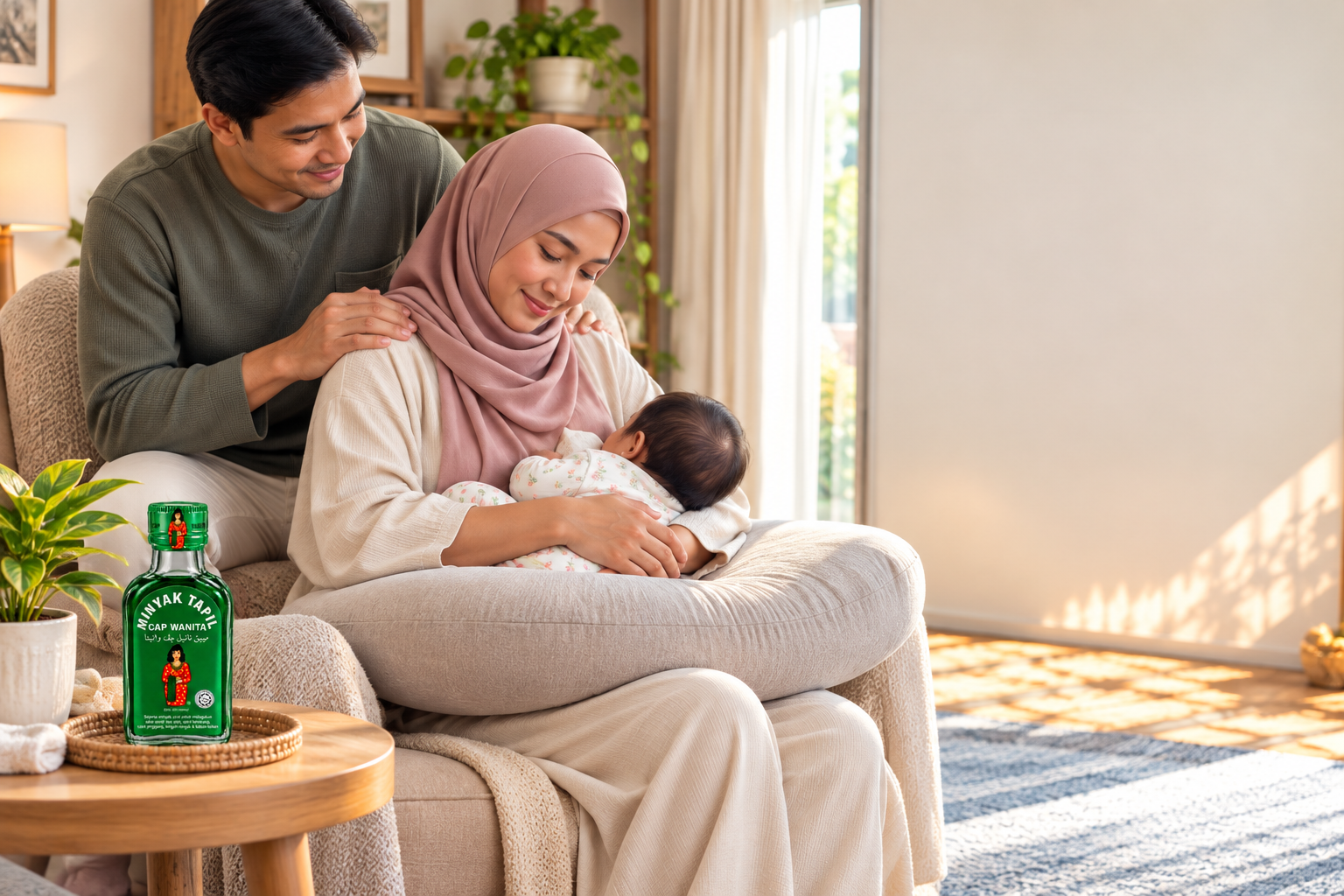
Between Days 15 and 20, baby-care routines become frequent while the mother's body is still recovering. Feeding, carrying, changing nappies and waking at night...

In Malay culture, this period is often associated with various traditional confinement and self-care practices. These may include dietary practices, the use of a traditional abdominal wrap, warming treatments, postpartum massage and the use of massage oils or traditional oils.
What Is Postpartum Confinement?
Traditionally, postpartum confinement refers to a period after childbirth when a mother pays particular attention to rest, diet, personal hygiene and body care. In Malay culture, the confinement period is often regarded as a time for the mother to rest, take care of her diet, practise personal care, receive support from family members and gradually return to her normal daily routine. However, not every traditional practice is suitable for every mother. Postpartum recovery can differ from one individual to another, including between mothers who have had a vaginal birth and those who have undergone a caesarean section. For this reason, postpartum care practices should be adapted to the mother's individual condition and the advice of healthcare professionals.
Why Is Rest Important After Childbirth?
After giving birth, a mother's daily routine can change completely. In addition to caring for her baby, she also needs to take care of herself. Sleep may become irregular, daily activities may change and the body needs time to gradually adjust after pregnancy and childbirth. This is why postpartum care is not only about the baby. The mother needs care too. Support from a partner and family, sufficient rest and attention to basic needs such as food, hydration and sleep can help a mother navigate this period of adjustment more comfortably.
Massage in Traditional Confinement Practices
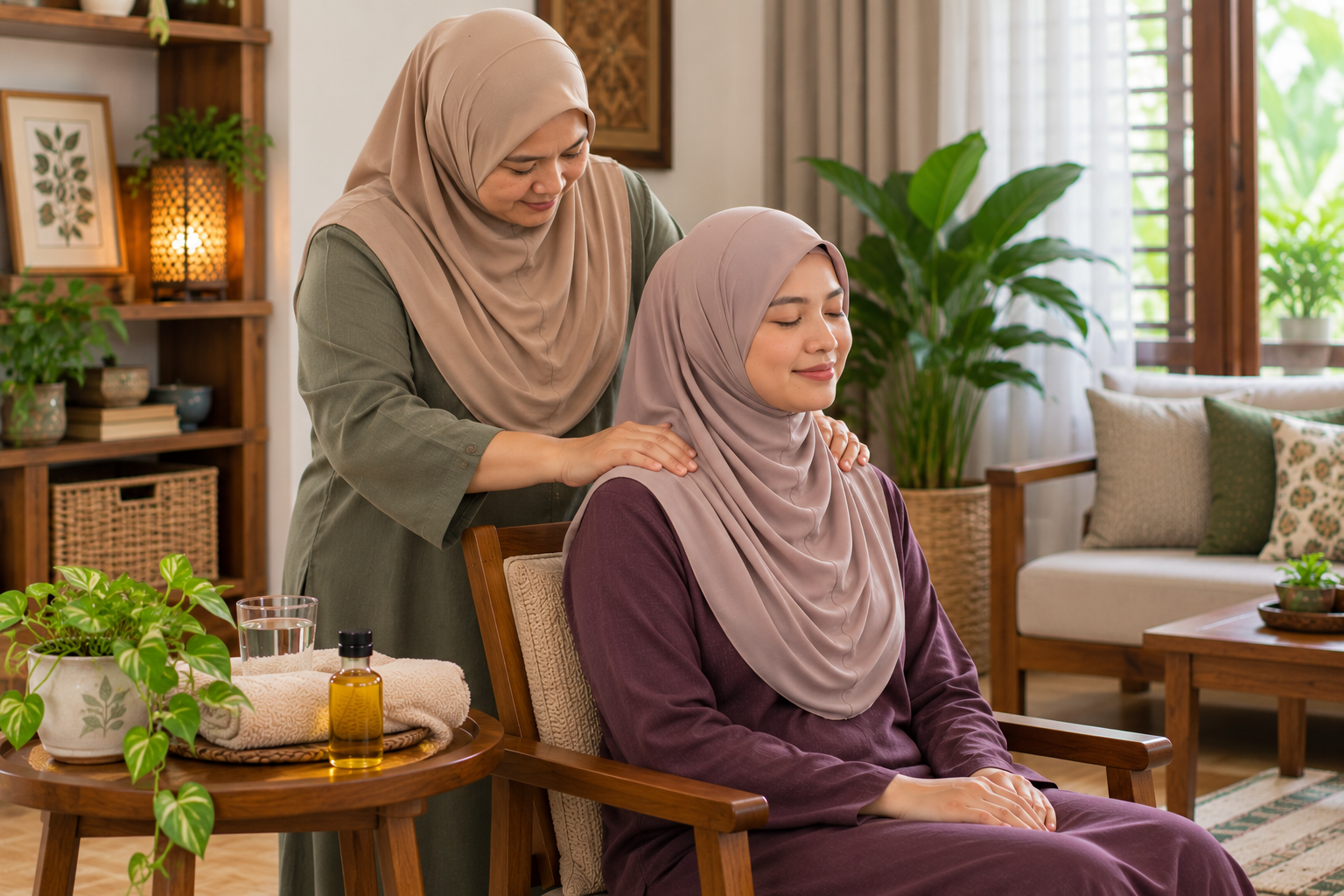
Postpartum massage is one of the traditional practices that has been observed in some Malay families. Traditionally, massage may be included as part of body-care routines and can provide a pleasant tactile experience for the mother. Massage oil is often used as part of this experience. Applying oil together with gentle massage can provide a sensation of warmth and comfort, depending on the product used and each individual's experience. However, postpartum massage should not be approached too quickly or without consideration. The mother's condition after childbirth should be taken into account, especially following surgery or certain complications.
Massage Oil in Traditional Self-Care
In traditional self-care practices, oil may be used together with massage to create a more comfortable experience. Minyak Tapil Cap Wanita, for example, has a distinctive herbal fragrance and has been part of its traditional product identity since 1979. Its herbal aroma, together with the warming sensation experienced during use, can form part of a self-care experience that is closely associated with traditional practices. It is not simply about the oil. It is also about touch, aroma, warmth and taking a moment to care for oneself.
Postpartum Confinement in the Modern World
Postpartum confinement practices continue to evolve. In the past, postpartum care often relied heavily on family wisdom and traditional practices. Today, mothers also have access to a much wider range of modern health information. This does not necessarily mean that tradition has to be abandoned. Instead, some families choose to combine traditional practices with modern healthcare, provided that the practices are appropriate for the mother's condition and do not conflict with advice from doctors or healthcare professionals. Tradition can continue while being approached with greater awareness and care.
Reference:
Ellya Sabrina Binti Isma'ail
Updated
Information on this site is for general information only and is not a substitute for professional medical advice. Consult a qualified healthcare practitioner for any health condition.
Between Days 15 and 20, baby-care routines become frequent while the mother's body is still recovering. Feeding, carrying, changing nappies and waking at night...
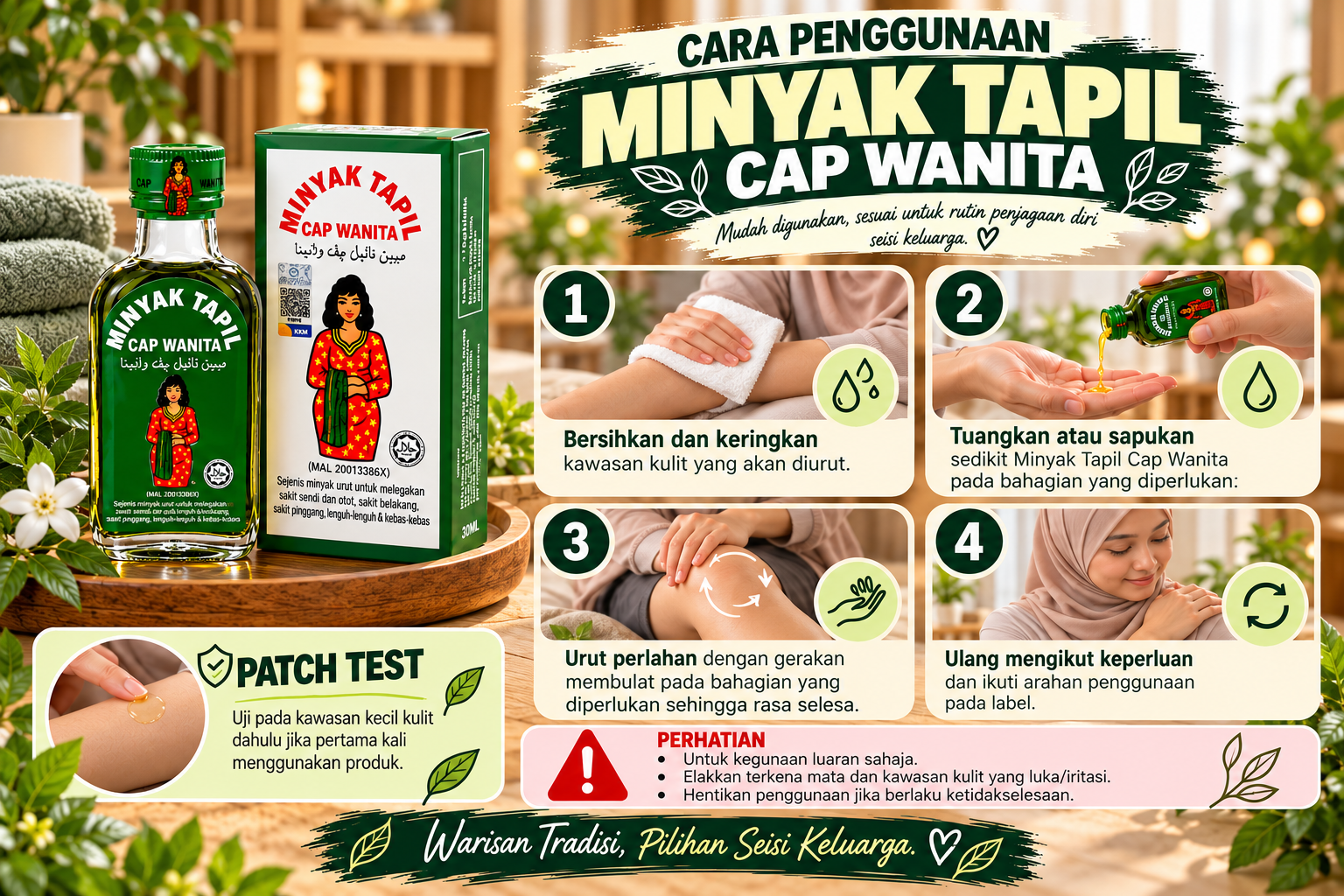
How to Use Minyak Tapil 1️⃣ Clean the skin – Ensure the area is clean and dry. 2️⃣ Apply a small amount – Use on the desired area. 3️⃣ Massage gently – Massage...
Key points to understand A gentle shoulder routine can support relaxation, but it does not correct an undiagnosed neck or nerve problem. Work posture, screen he...
Install App