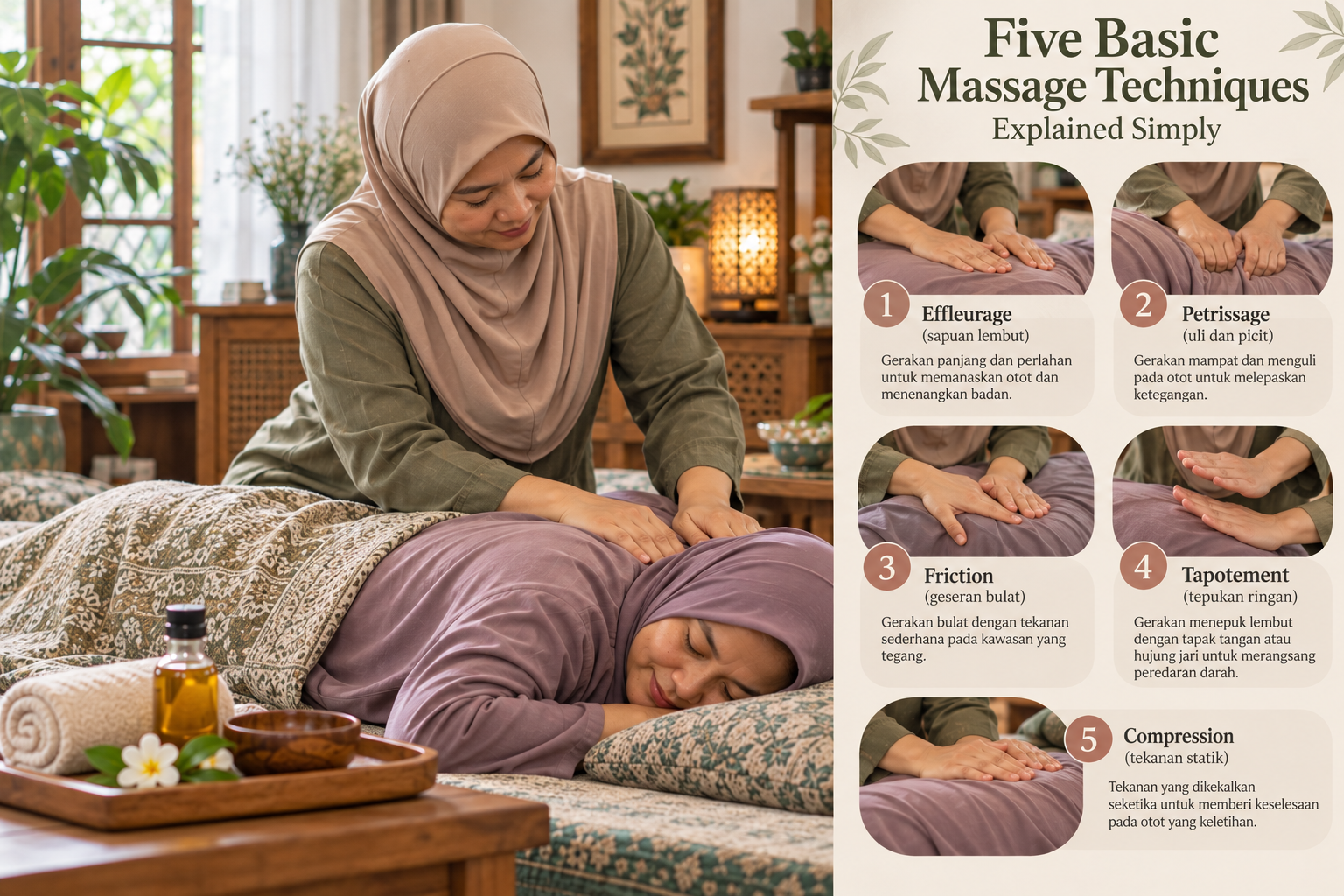
How to Massage Tired Shoulders Gently After Work
Key points to understand A gentle shoulder routine can support relaxation, but it does not correct an undiagnosed neck or nerve problem. Work posture, screen he...

This guide divides the 40-day confinement period into realistic recovery phases. Minyak Tapil Cap Wanita may complement an external comfort routine on healthy skin, but it does not replace treatment. Wound condition, breastfeeding, warning signs, maternal emotions and professional healthcare advice must remain the priorities.
The 40-day confinement period gives a mother time to adjust after childbirth, rest, nourish herself and learn a new routine with her baby. Modern healthcare also regards the first six weeks after birth as an important postnatal period. Although 40 days is closely associated with Malay tradition, recovery does not follow one identical timetable. The type of birth, blood loss, stitches, surgery, existing health conditions, family support and the baby's needs can all shape an individual mother's experience.
A sound confinement routine begins with simple priorities: sleep when possible, eat balanced meals, drink enough fluids, maintain hygiene, move within personal limits and attend scheduled health checks. A mother should also observe her bleeding, temperature, wound, pain, bladder and bowel function, breast condition and emotional changes. Heavy bleeding, chest pain, shortness of breath, fever, a severe headache, confusion, fainting, wound discharge, or a red and swollen leg requires prompt medical attention. Massage and topical oil should never be used to mask these warning signs.
Minyak Tapil Cap Wanita may be positioned as a small part of an external comfort routine, not as a substitute for medical care. Before use, read the product label, inspect the skin and test a small amount on a limited area. Stop if there is excessive burning, itching, rash or swelling. Apply only a thin layer to healthy skin. Avoid surgical wounds, stitches, the perineal area, breasts and nipples, the face, and any area that the baby may touch or place in the mouth. Dividing the 40 days into phases helps a family create realistic expectations.
Days 1 to 3 focus on rest, observation and hospital instructions. Days 4 to 10 are suitable for assessing basic comfort, gentle movement and practical support from a caregiver. Days 11 to 20 draw attention to feeding posture and tired shoulders, arms or feet. Days 21 to 30 may involve a gradual increase in ordinary movement. Days 31 to 40 are a useful time to review progress, prepare questions for a postnatal check and plan care beyond confinement. Gentle massage does not mean deep pressure or an attempt to “correct” the body. Begin with light contact, slow strokes and a short session.
Obtain the mother's consent throughout. Do not massage the abdomen, spine, prominent veins, numb skin, bruises, swelling or sharp pain. A calf that is painful on one side, hot, red or swollen must not be massaged because it may indicate a blood clot. After a caesarean birth, wound care should follow clinical instructions; scar massage is not an early-postpartum activity and should only be considered when the wound is completely healed and professional advice has been obtained. Good care also respects a mother's emotional health. Fatigue, hormonal shifts and new responsibilities may leave her tearful or overwhelmed.
Family members can help by preparing meals, handling household work, looking after the baby briefly and listening without judgement. If sadness persists, anxiety interferes with daily functioning, or thoughts of harming herself or the baby occur, professional help is urgently needed. In summary, 40-day confinement is not a race to return to a pre-pregnancy state. It is a framework for supporting healing, building confidence and understanding the changing body. Minyak Tapil Cap Wanita can complement gentle external application and massage when appropriate, but decisions should always reflect the mother's condition, the product label and advice from qualified health professionals.
Pre-routine checklist: confirm that the mother is alert, stable and consenting; there is no fever, unusual bleeding, breathlessness or chest pain; the intended area is free from wounds, rash, numbness and swelling; the baby is in a safe place; and hands and equipment are clean. Start with the shortest duration and lightest pressure. Keep water and a phone nearby. Record any change afterwards, including skin redness, dizziness, increasing pain or bleeding. When uncertain, postpone the application and contact a healthcare professional. Choosing not to use an oil on a particular day is also a valid self-care decision.
01 - Kementerian Kesihatan Malaysia. Perinatal Care Manual, Fourth Edition. https://hq.moh.gov.my/bpkk/images/PERINATAL_CARE_MANUAL_4th_Edition_2020_11Mei2023.pdf
02 - World Health Organization. WHO Recommendations on Maternal and Newborn Care for a Positive Postnatal Experience. https://www.who.int/publications/i/item/9789240045989
03 - Bahagian Perubatan Tradisional dan Komplementari, KKM. Traditional Postnatal Care Guideline. https://hq.moh.gov.my/tcm/ms/upload/garispanduan/amalan/Postnatal.pdf
#40DaysPostpartum #MinyakTapilCapWanita #PostpartumMothers #PostnatalCare #GentleMassage
Cahaya Sinar
Updated
Information on this site is for general information only and is not a substitute for professional medical advice. Consult a qualified healthcare practitioner for any health condition.
Key points to understand A gentle shoulder routine can support relaxation, but it does not correct an undiagnosed neck or nerve problem. Work posture, screen he...
Key points to understand Long strokes spread oil and introduce touch. Kneading lifts and releases soft tissue gently. Small circles focus on a limited area, sta...
Days 11 to 14 often bring a different set of physical challenges. A mother may be feeding, changing, carrying and settling her baby more frequently. These tasks...
Install App